











Mitla
Archeological site
Mitla
This is a zone where stone was worked like jewellery and the Zapotec people showed their devotion to the dead. Here we can see the imprint of the skills of this indigenous group and its marvellous world, established 18 centuries ago.
We now call it Mitla from its Nahuatl name of Mictlán, but it was known in Zapotec as Lyobáa, “resting place” of the dead. It is estimated that Zapotec groups began settling the site in approximately 200 AD. It grew in importance after the fall of Monte Albán in the ninth century, reaching its height in approximately the year 1200, and maintaining supremacy in the Valley of Tlacolula until the Spanish conquest. Its population once stood at about 15,500. Mitla is currently a thriving, bustling city that contains and surrounds the archeological zone, where visitors can experience the everyday existence of a Zapotec community.
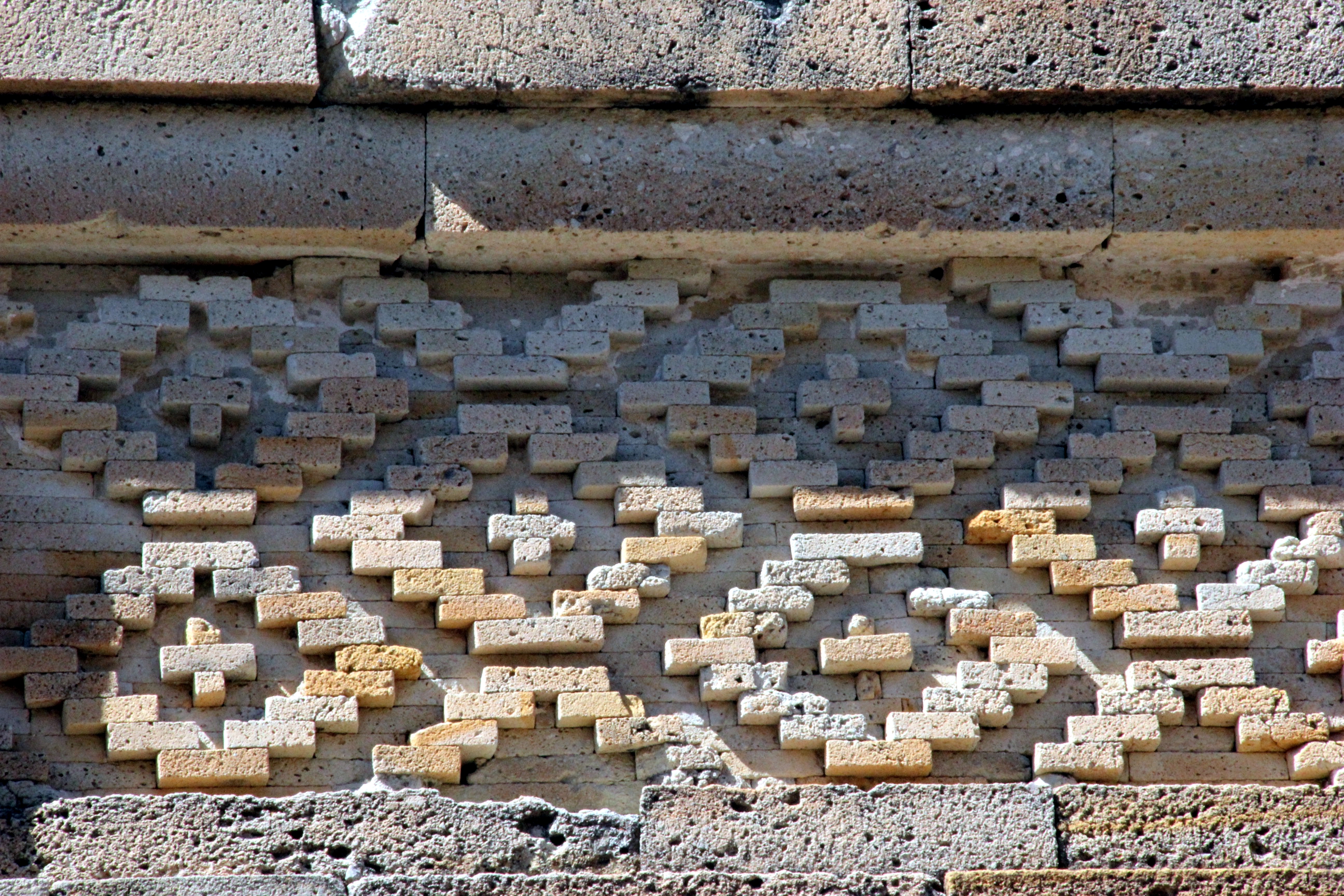
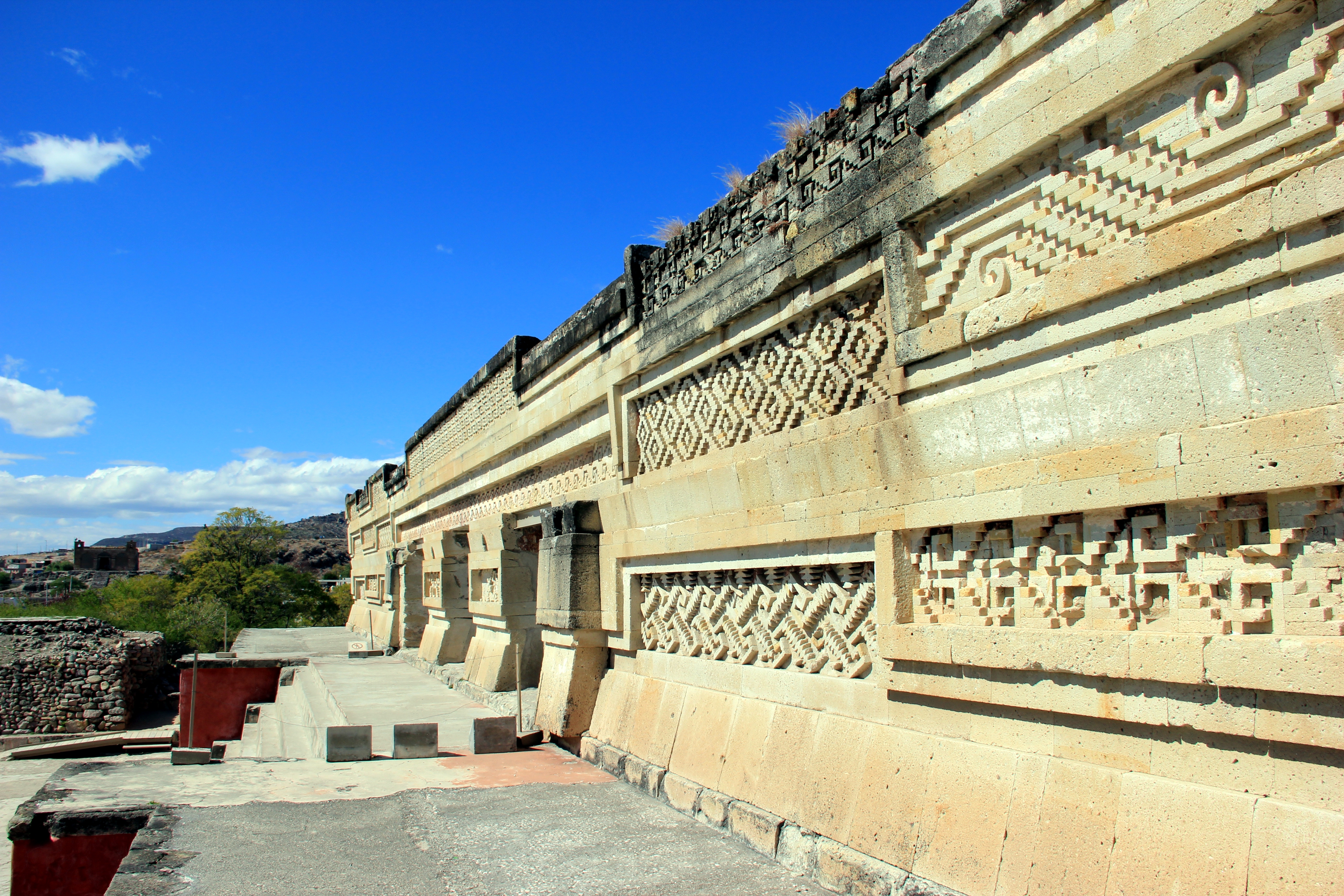
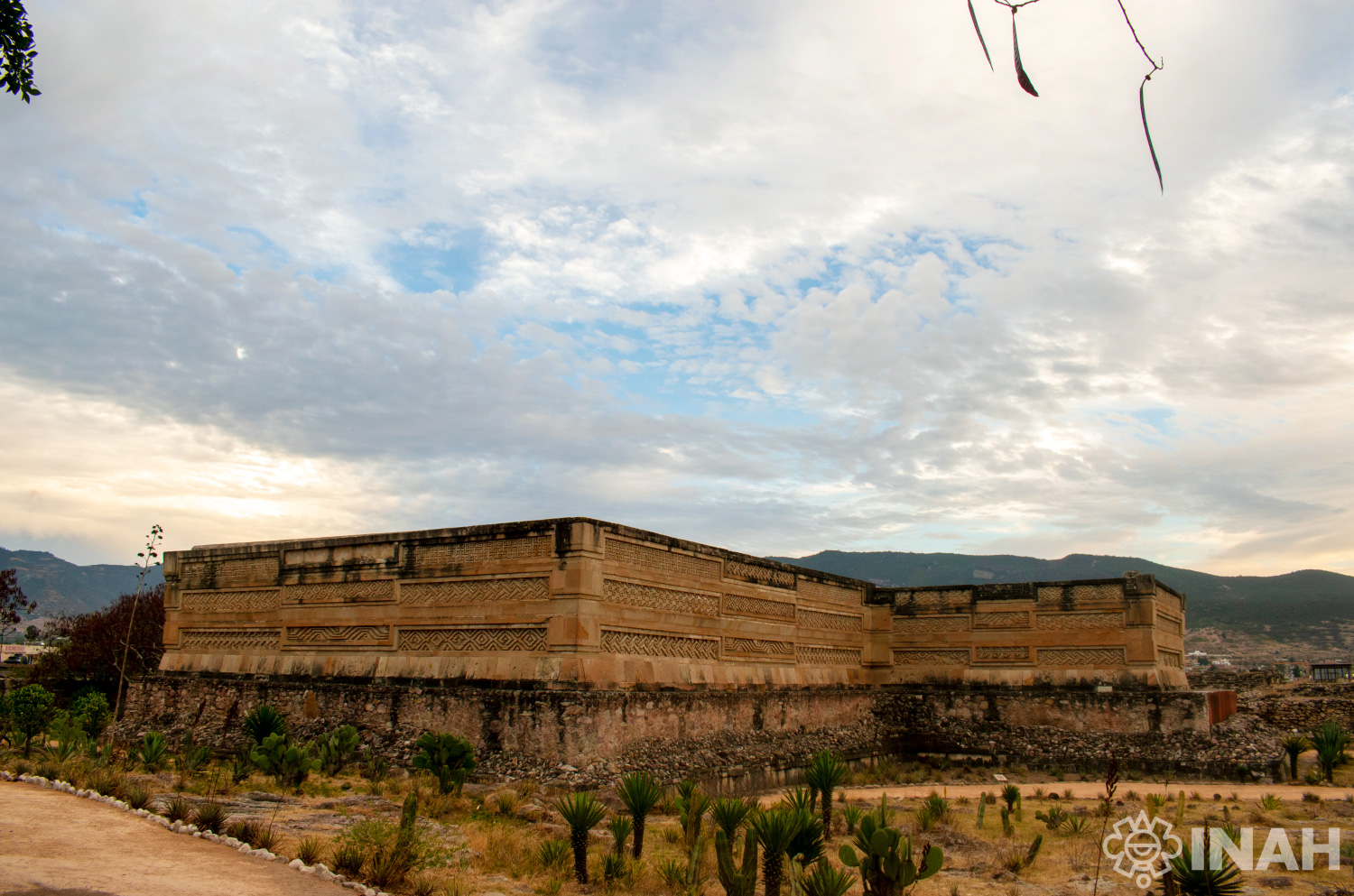
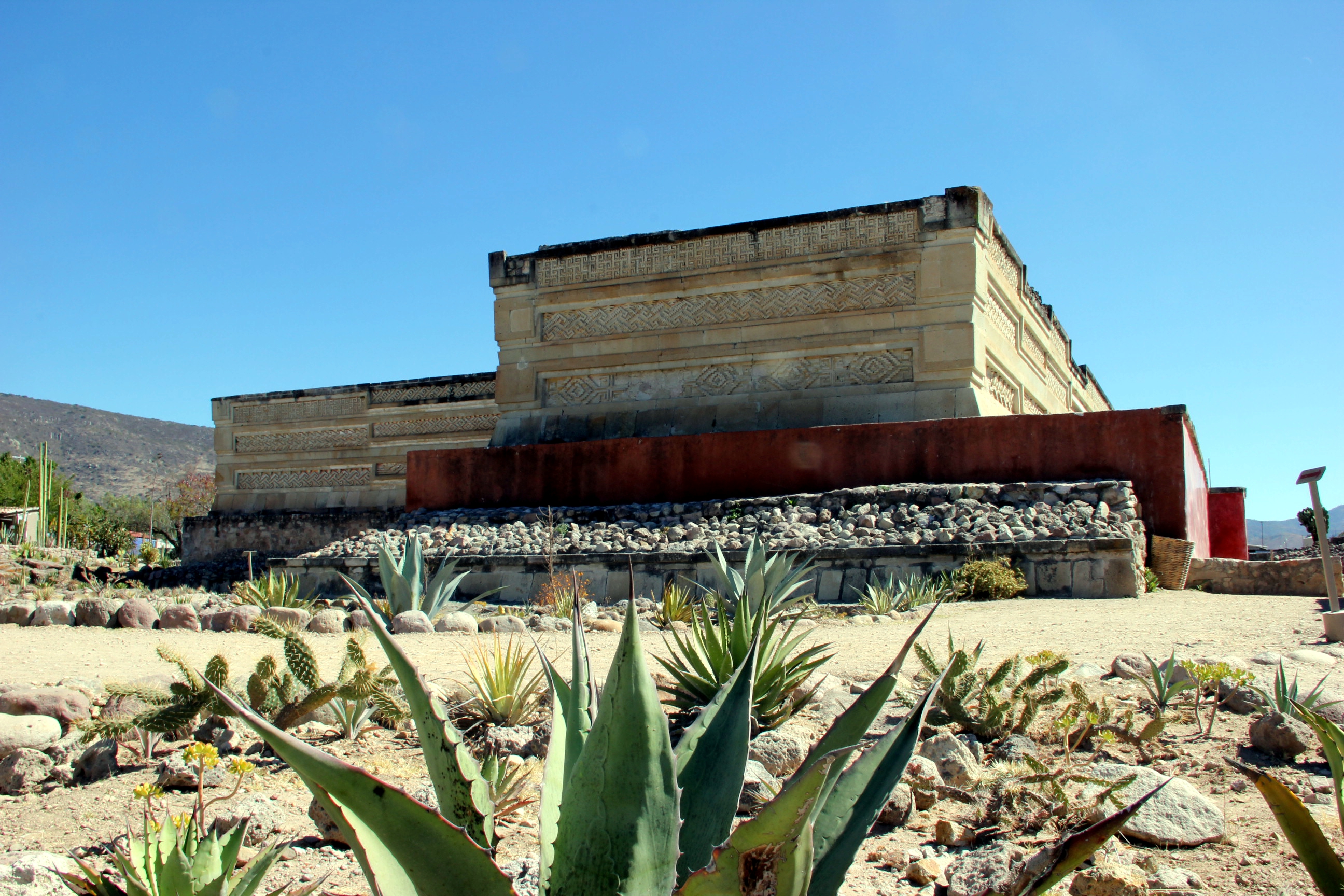
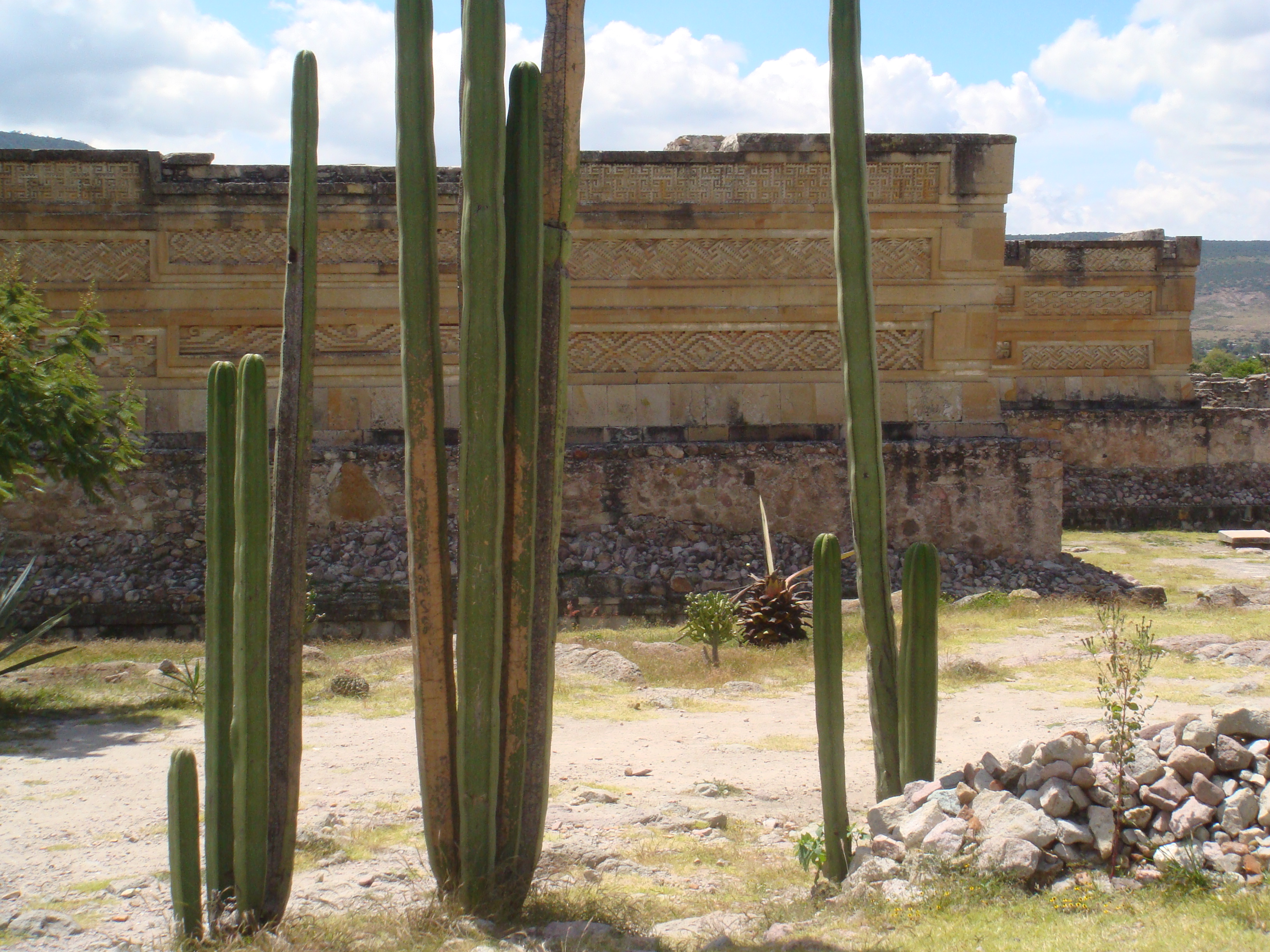
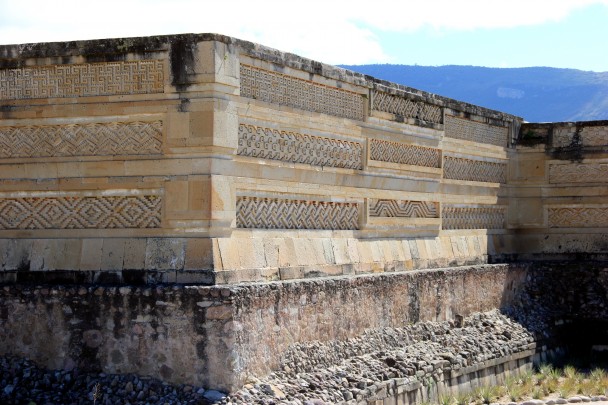
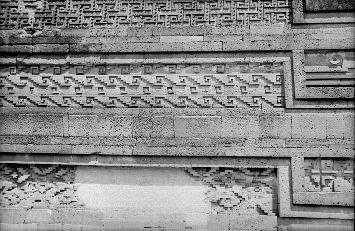
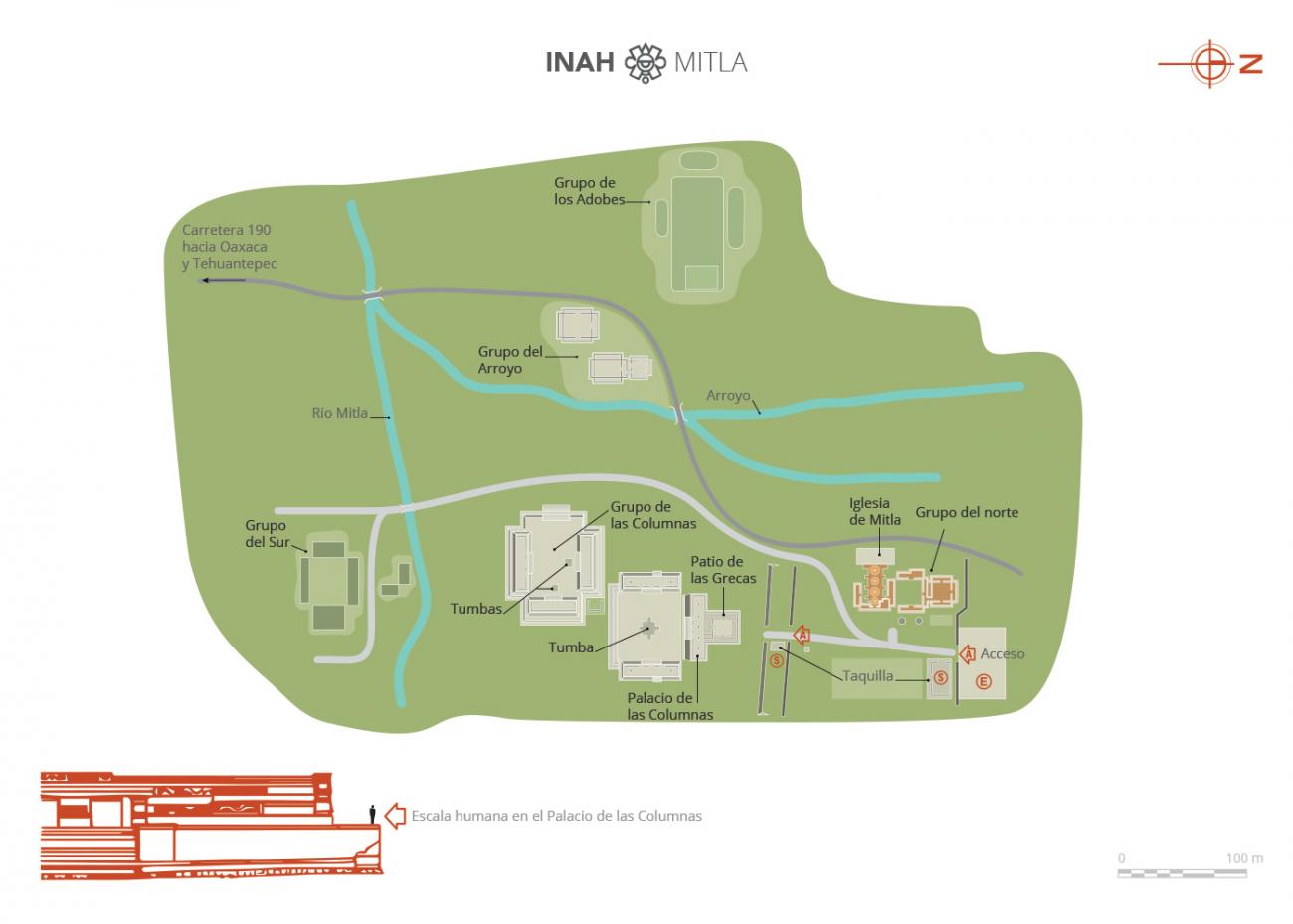
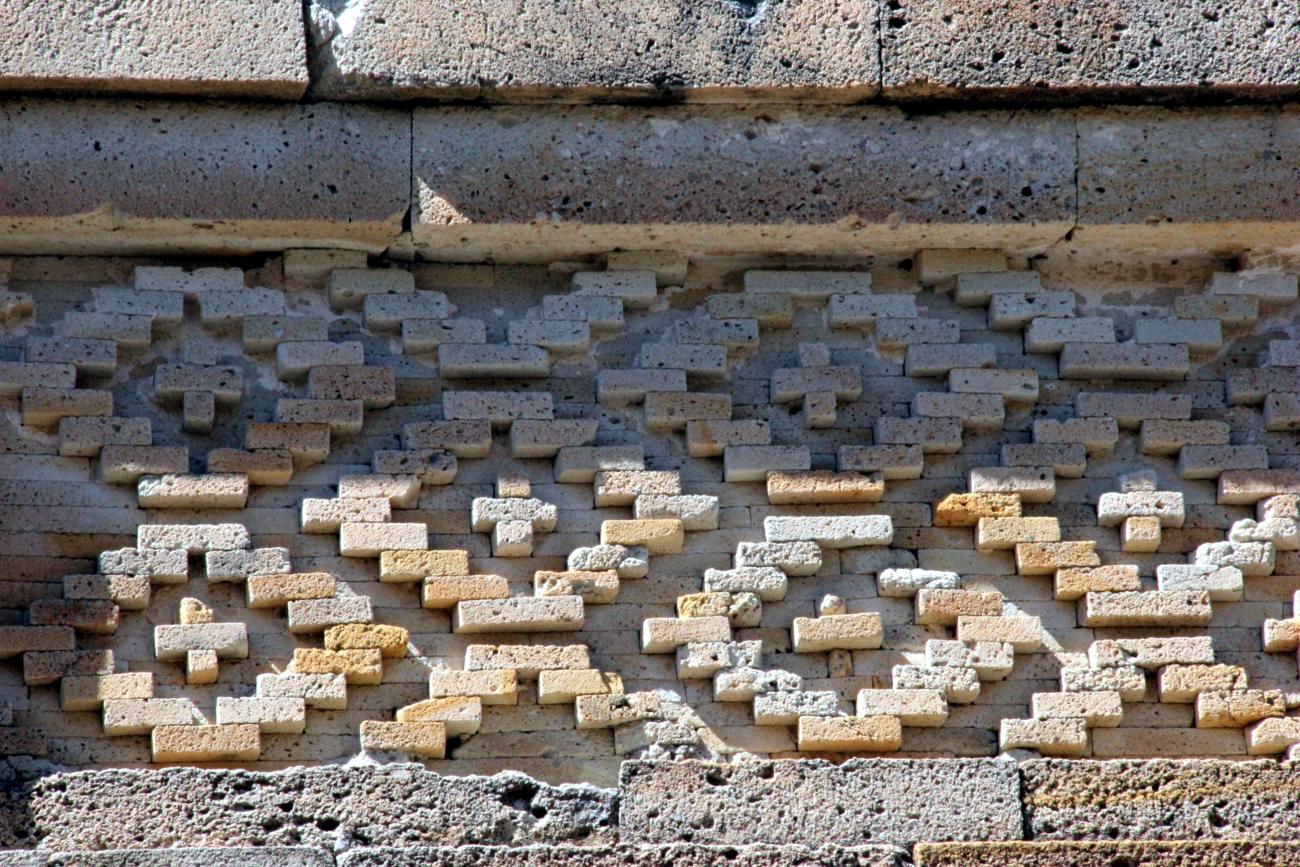
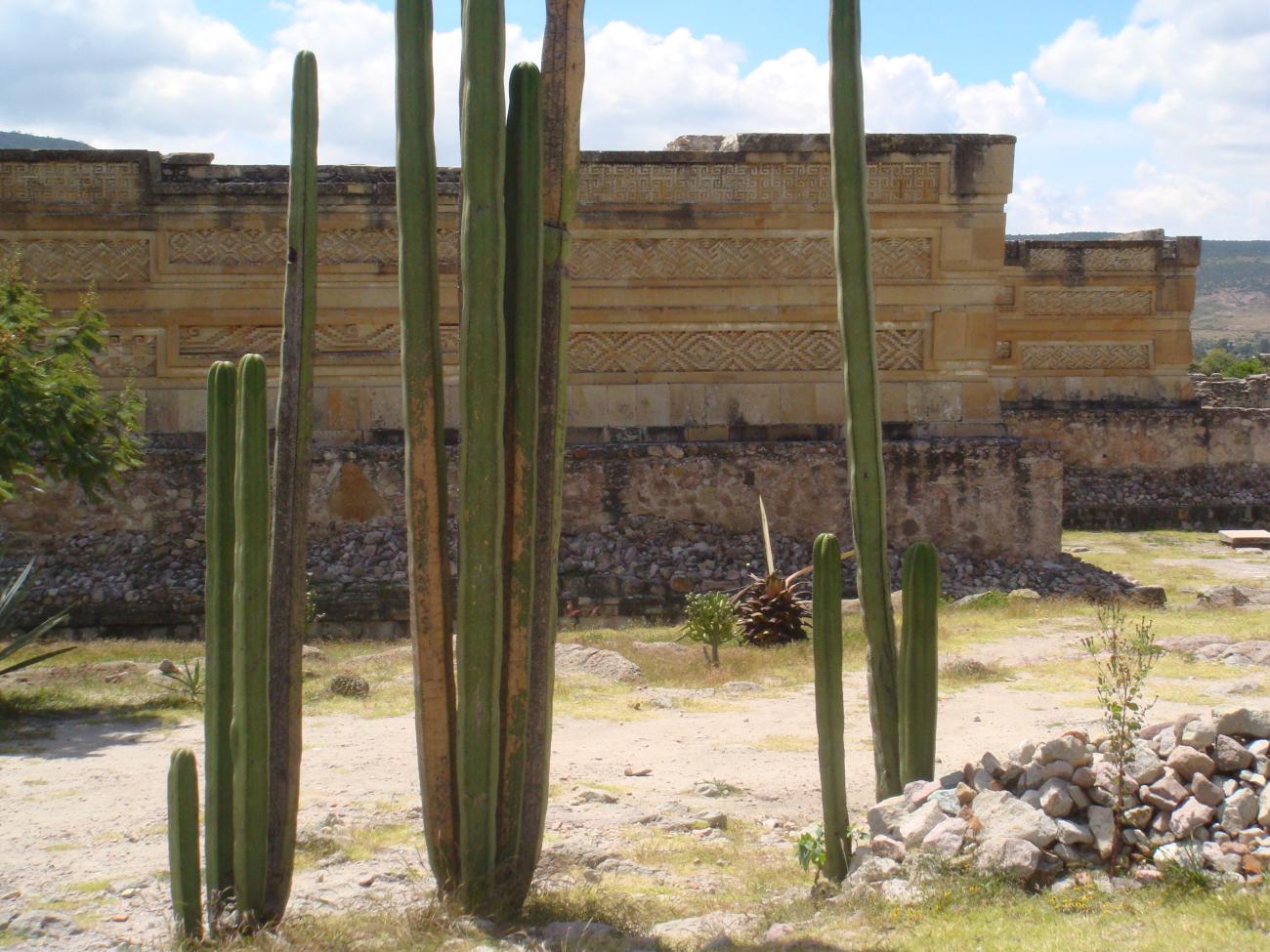
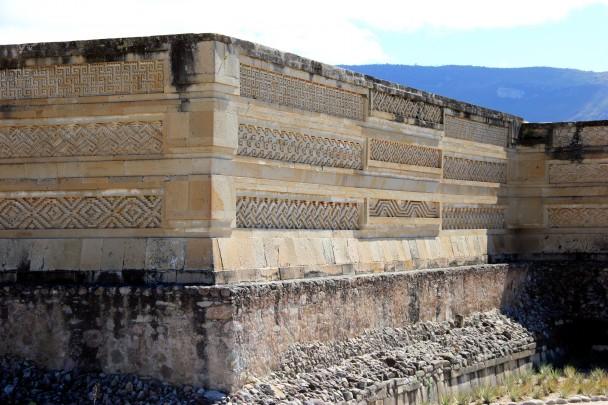
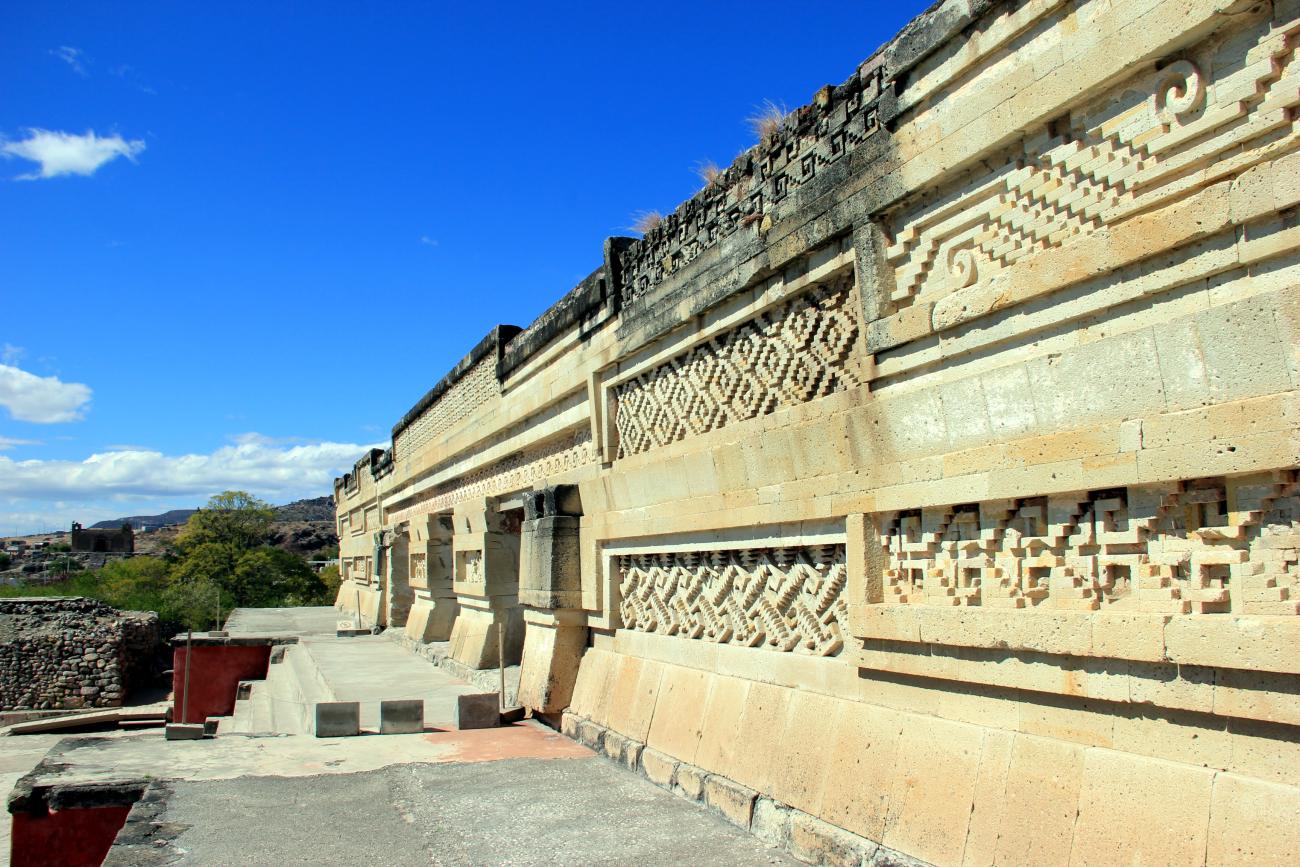
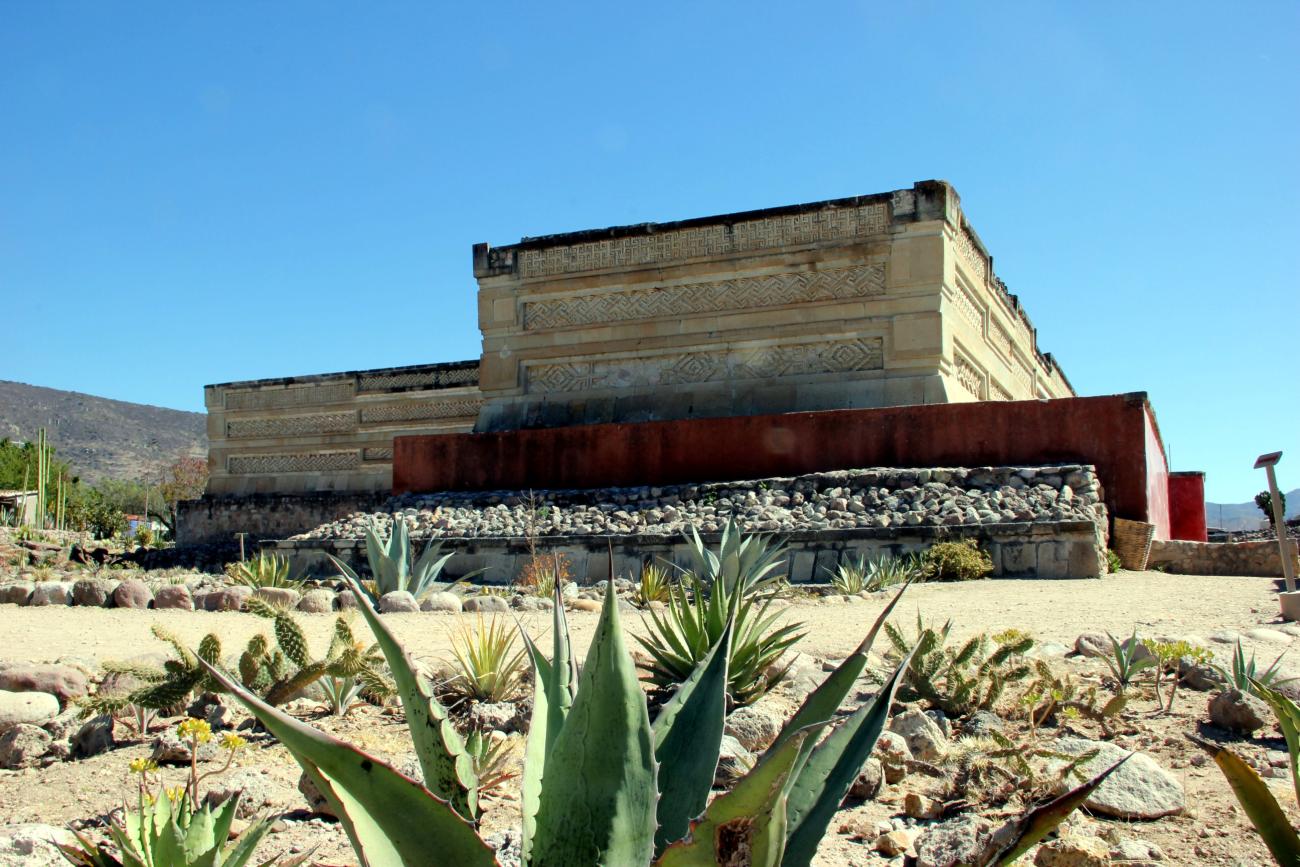
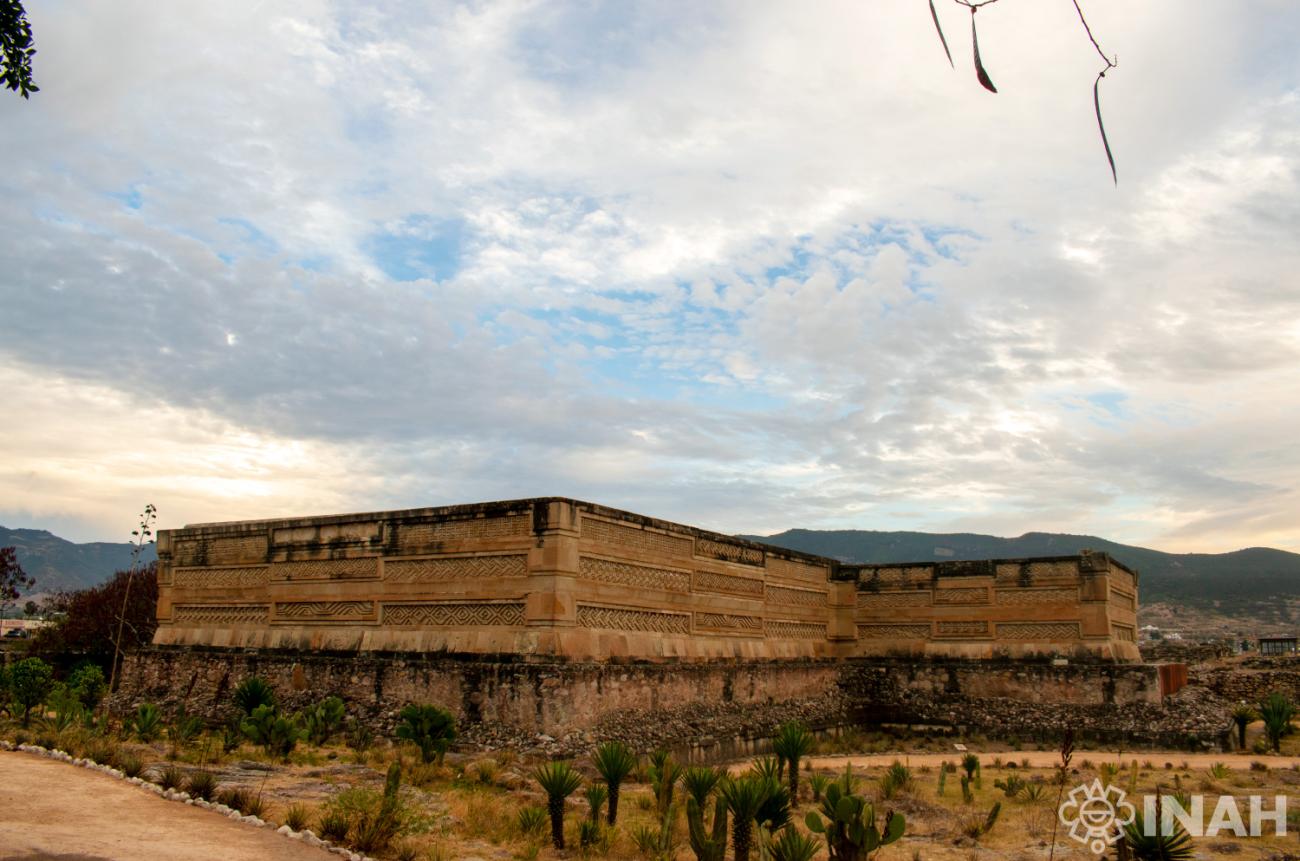
Five groupings of monumental architecture remain from ancient Mitla: the Northern Group, the Column Group, the Stream Group, the Adobe or Calvary Group and the Southern Group. The latter two date from an earlier age and are similar in style to Monte Albán (plazas bordered by palaces erected on platforms). The other three consist of three quadrangular courtyards interconnected with walkways. These are surrounded by large halls whose facades and internal walls present us with a profusion of complex geometrical mosaic decoration in finely carved stone. This is noteworthy due to its variety, which is characteristic of the late Zapotec style and cause for admiration from both locals and outsiders.
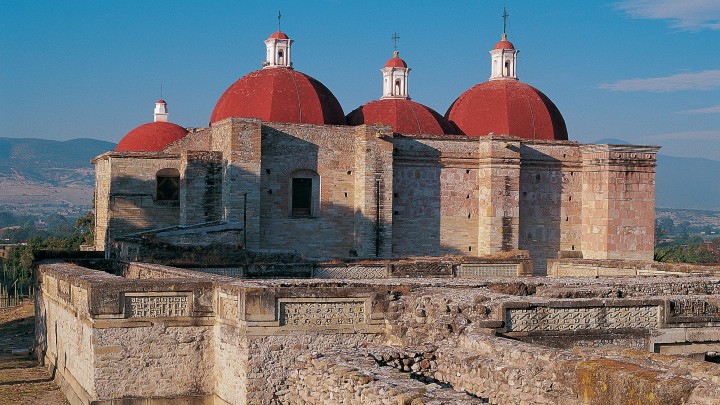
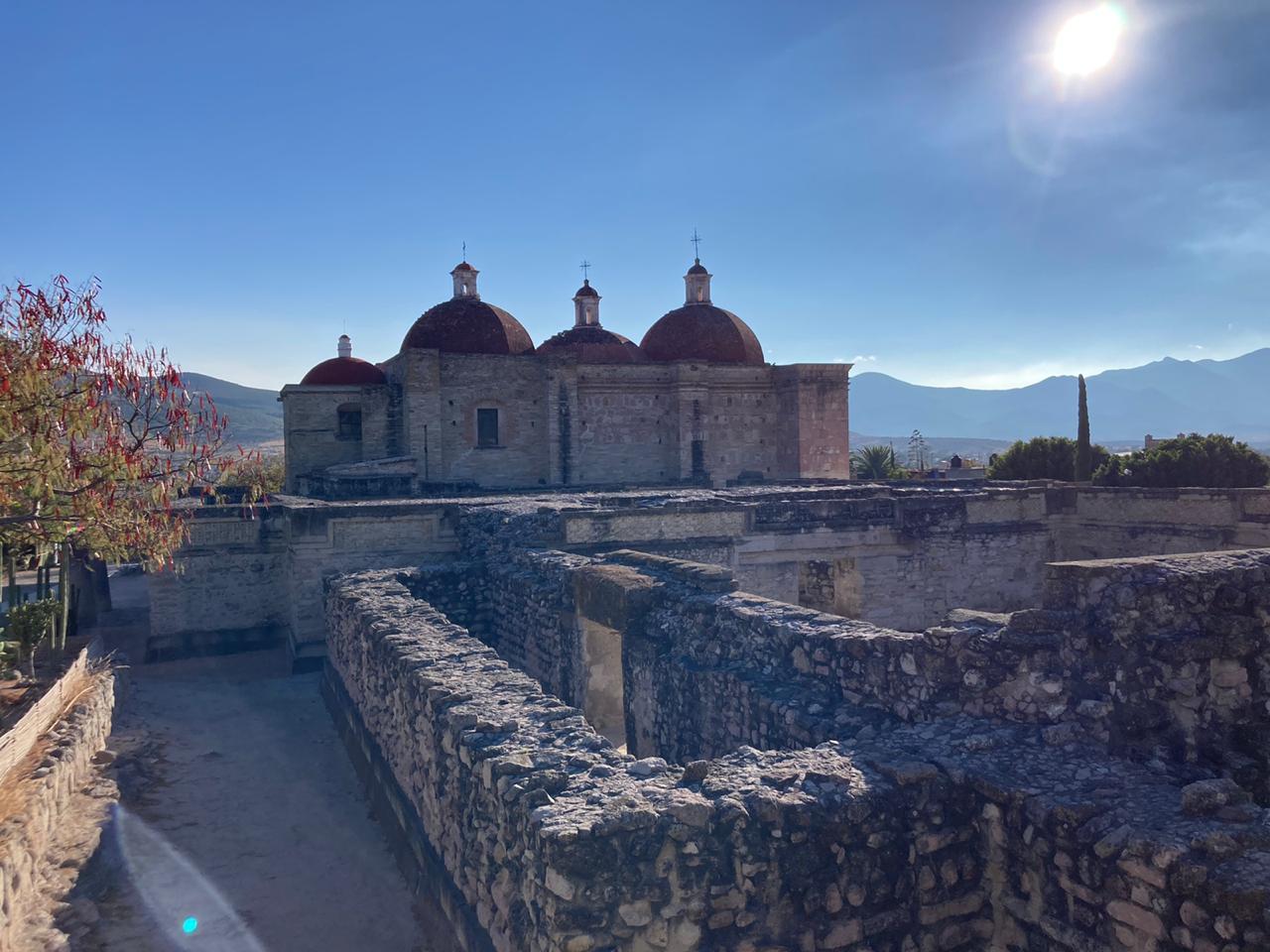
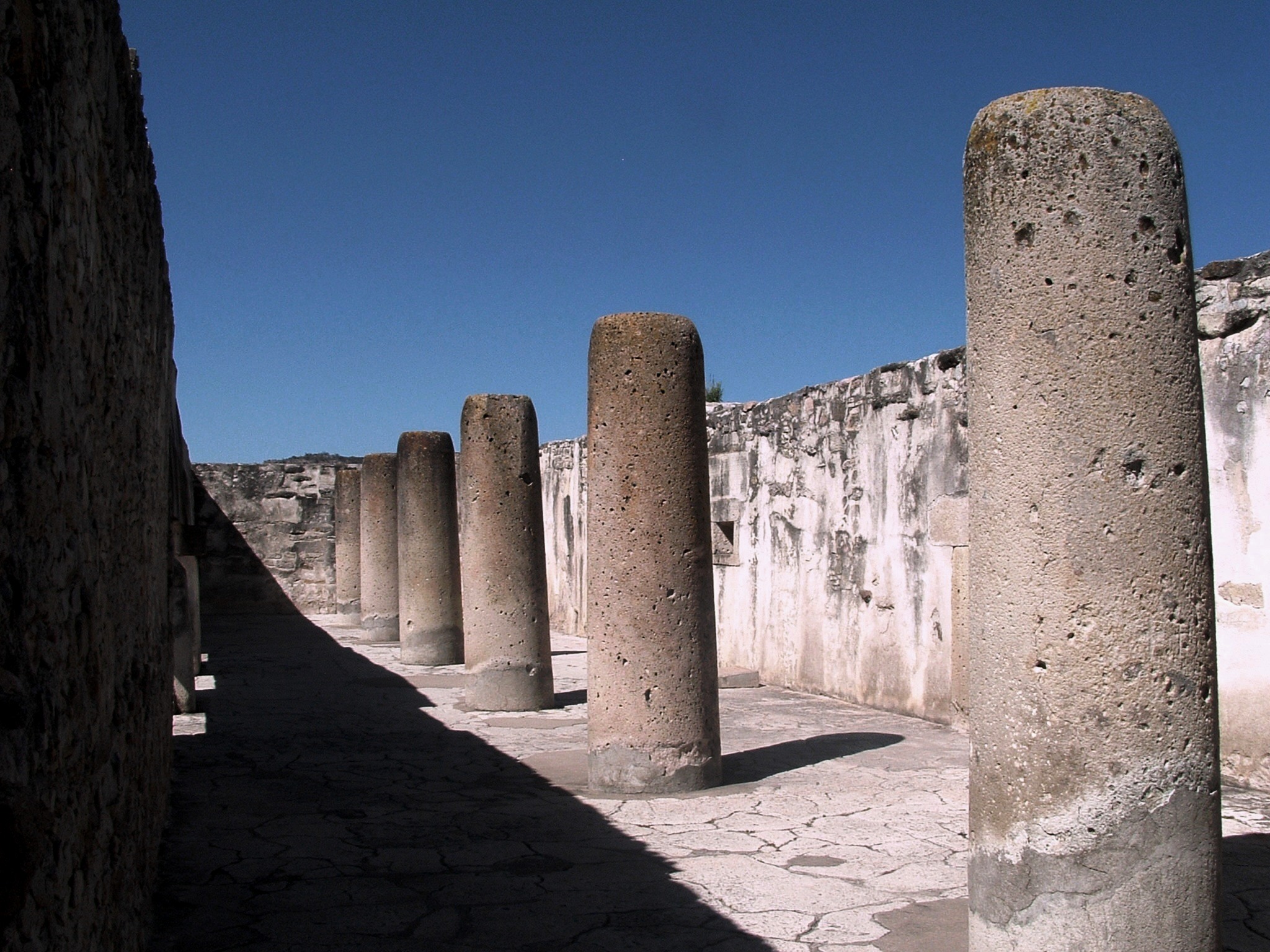
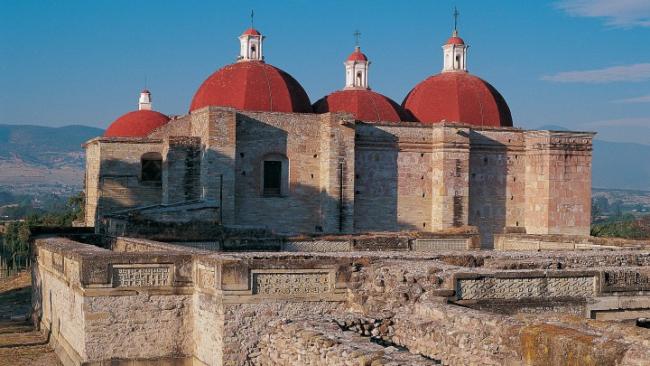
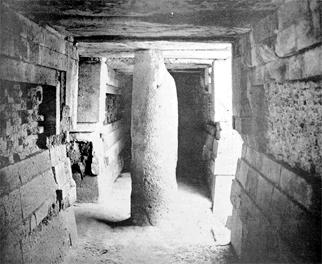
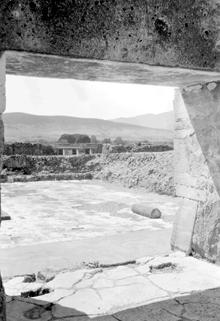
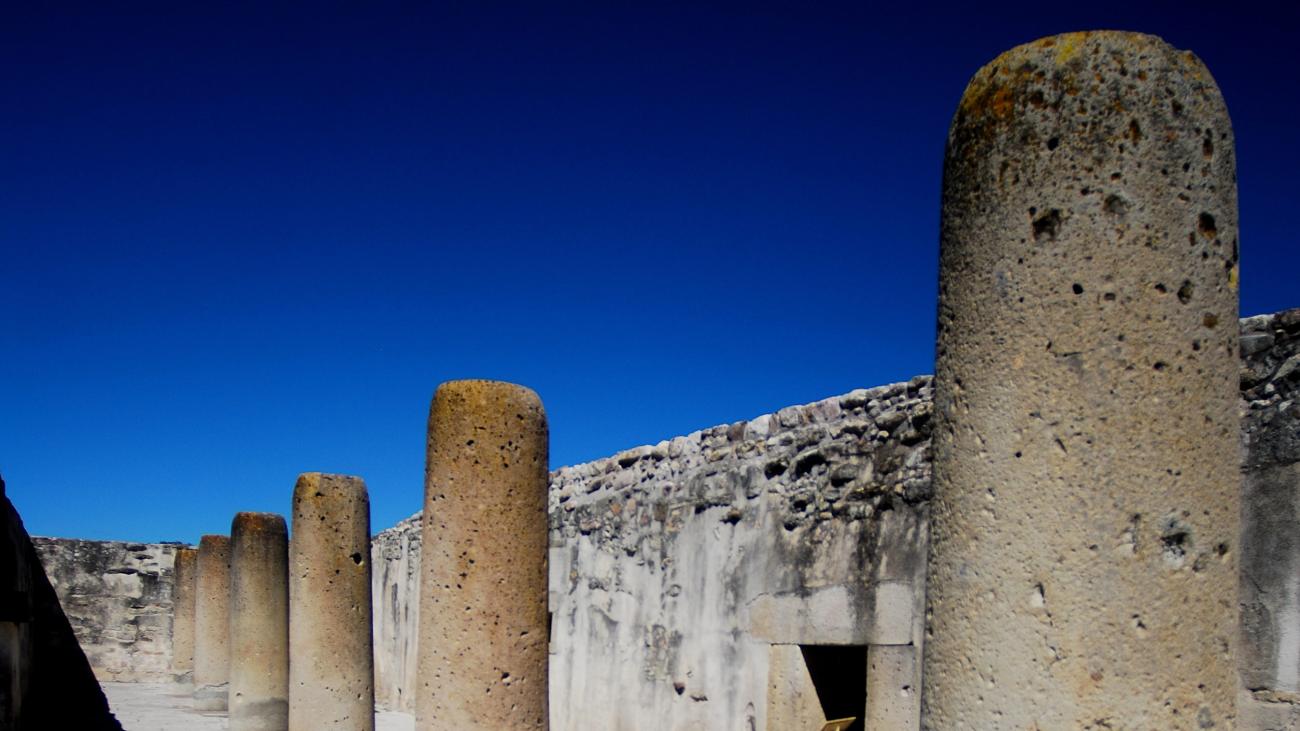
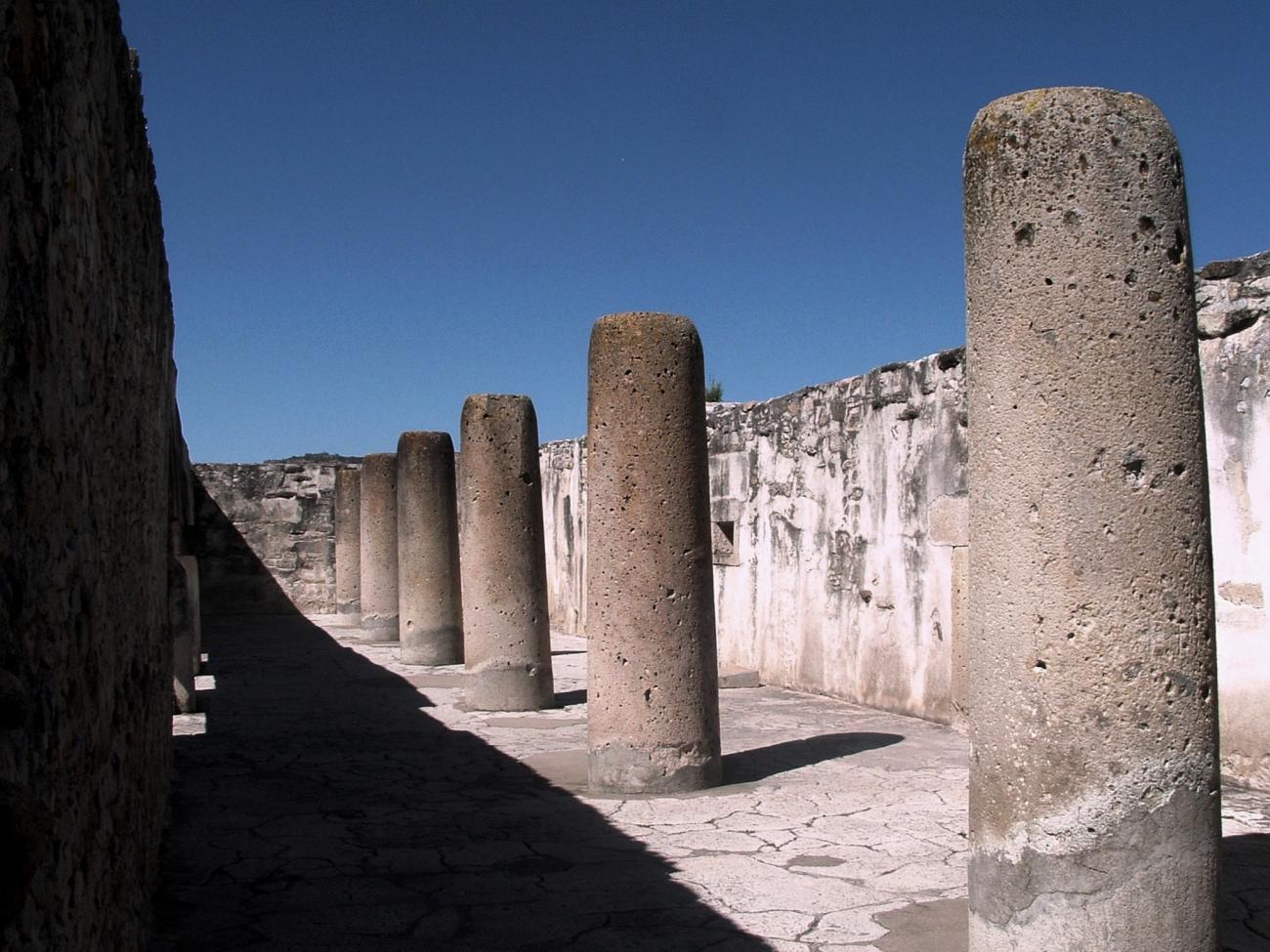
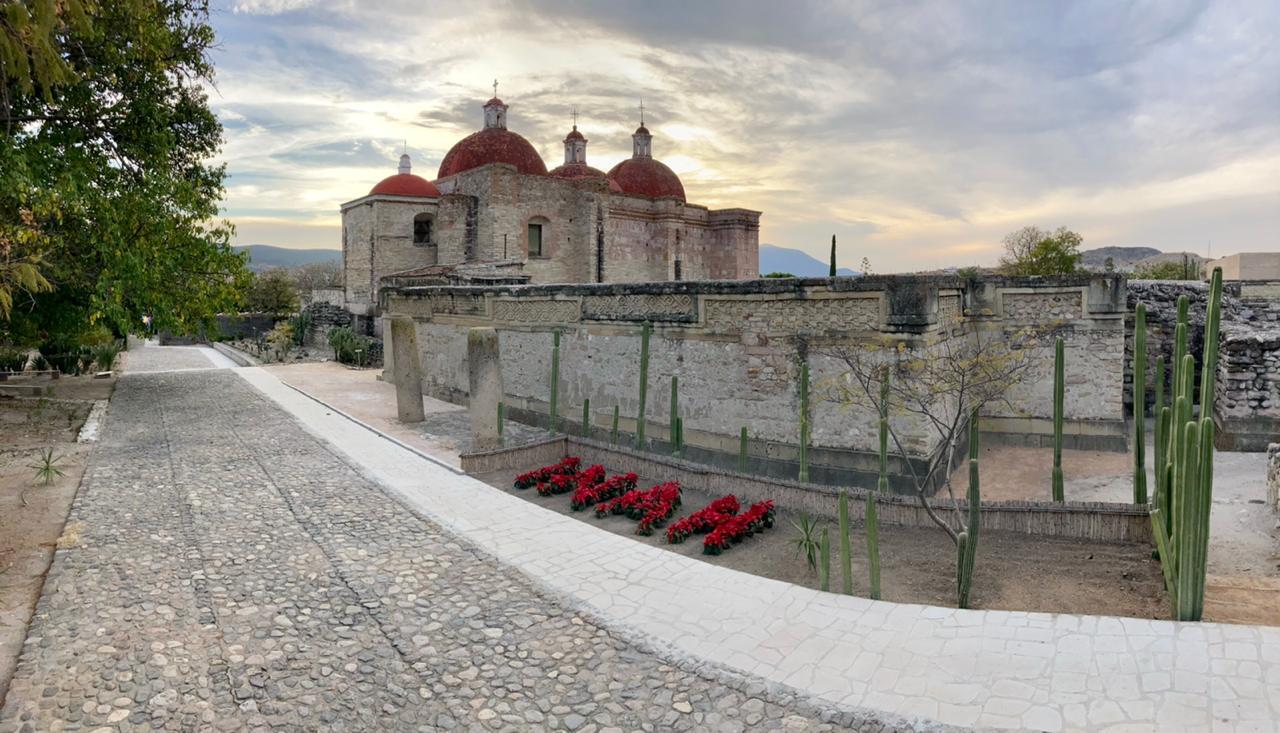
The Hall of Columns is the most outstanding of these buildings. Inside, there is a row of columns each carved from a single block of stone, fulfilling the architectural roles of support and decoration. In Courtyard E, several ancient palaces were destroyed and plundered for stones to build the church of San Pablo, which nevertheless remained supported and surrounded by extraordinary pre-Hispanic structures.
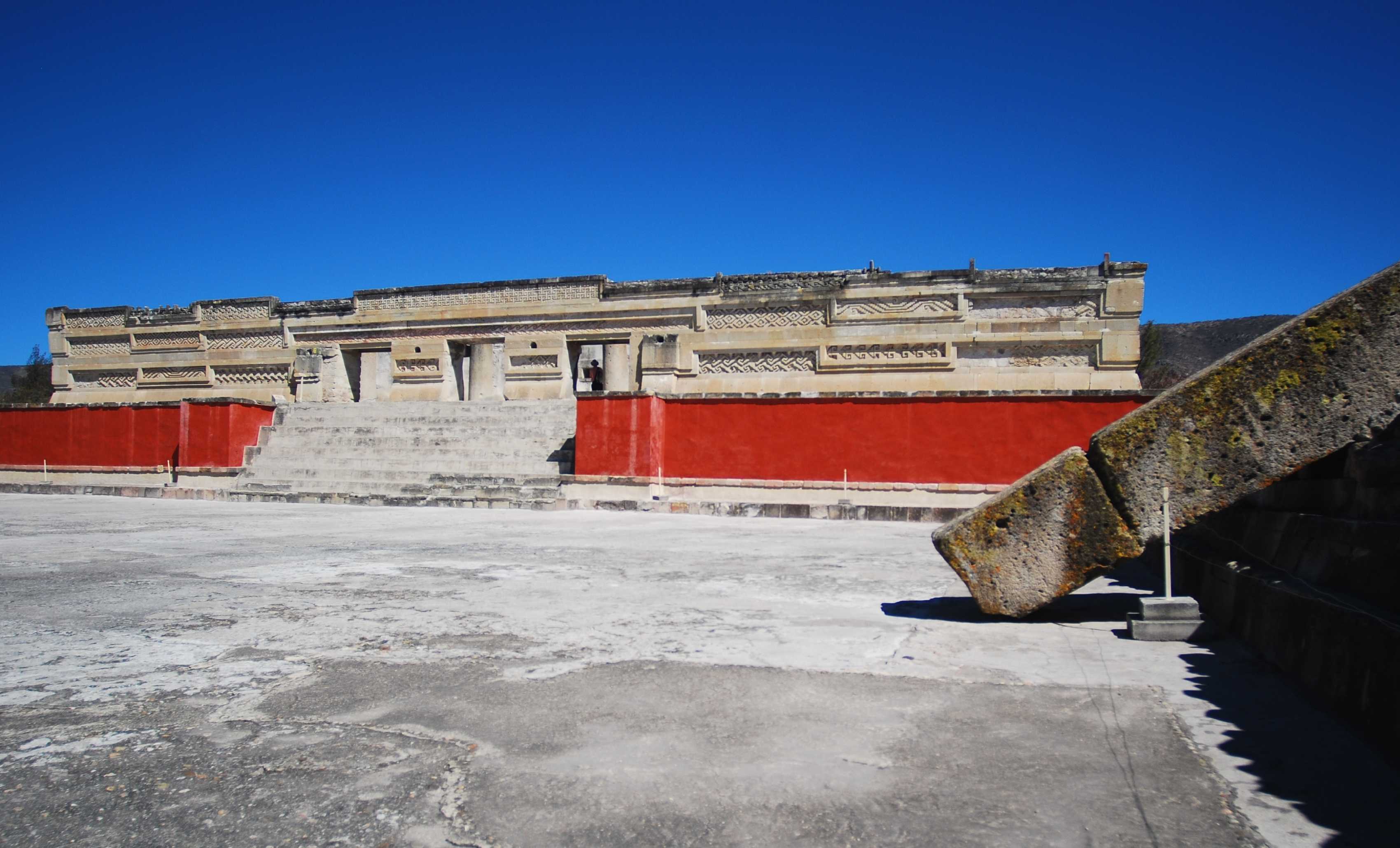
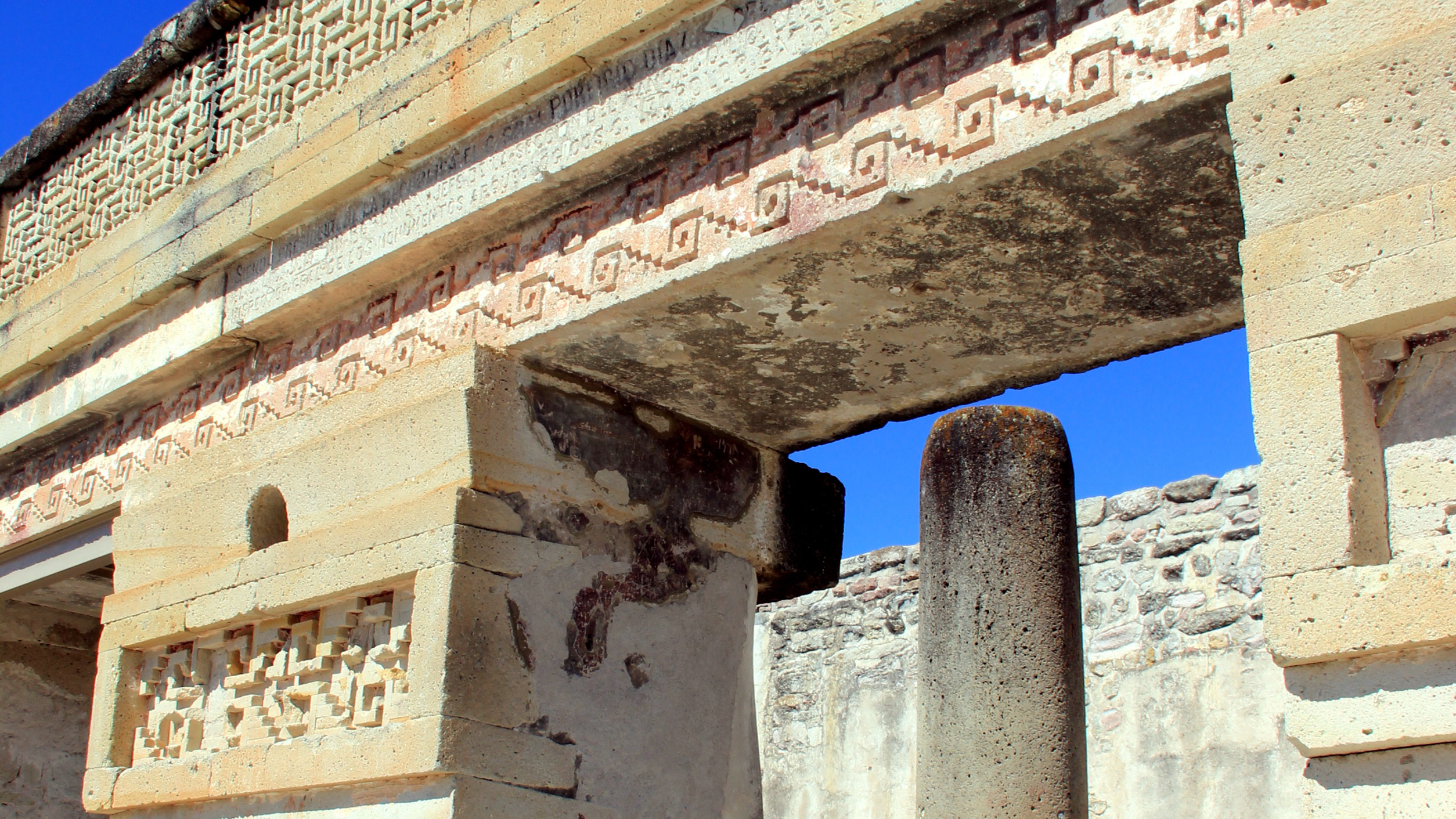
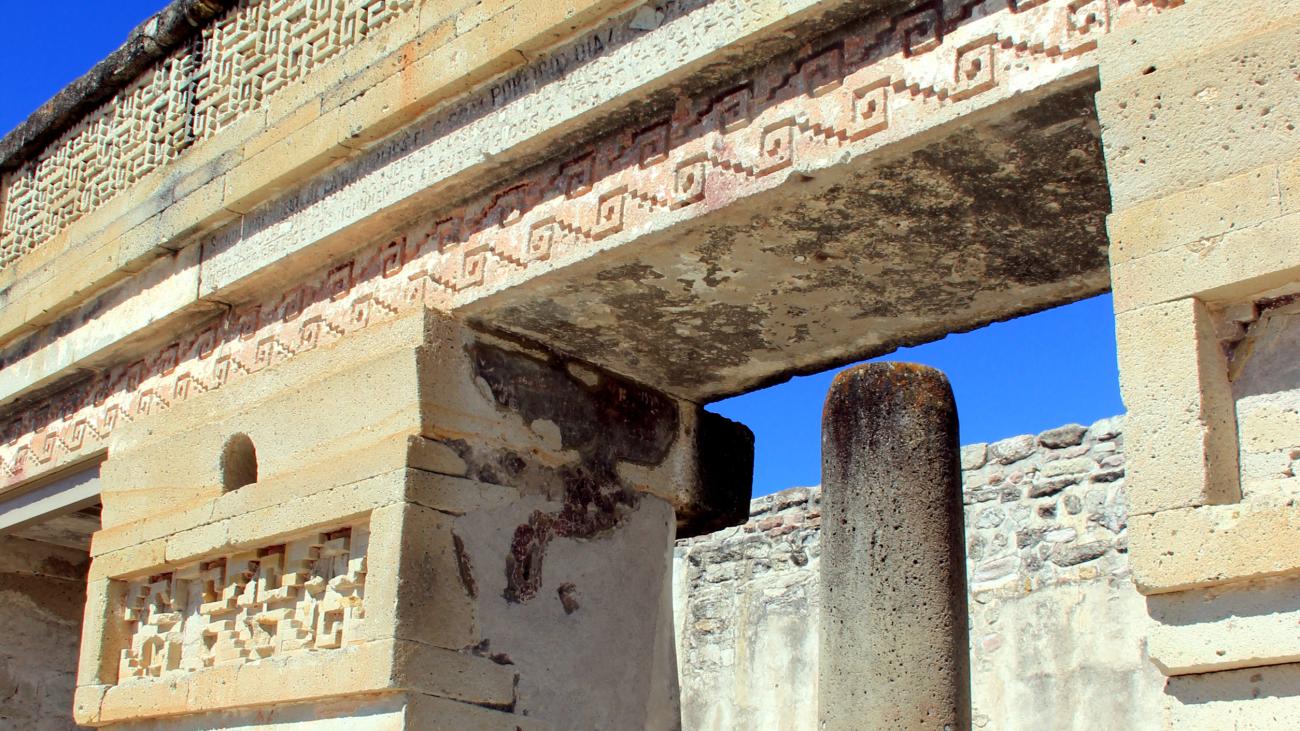
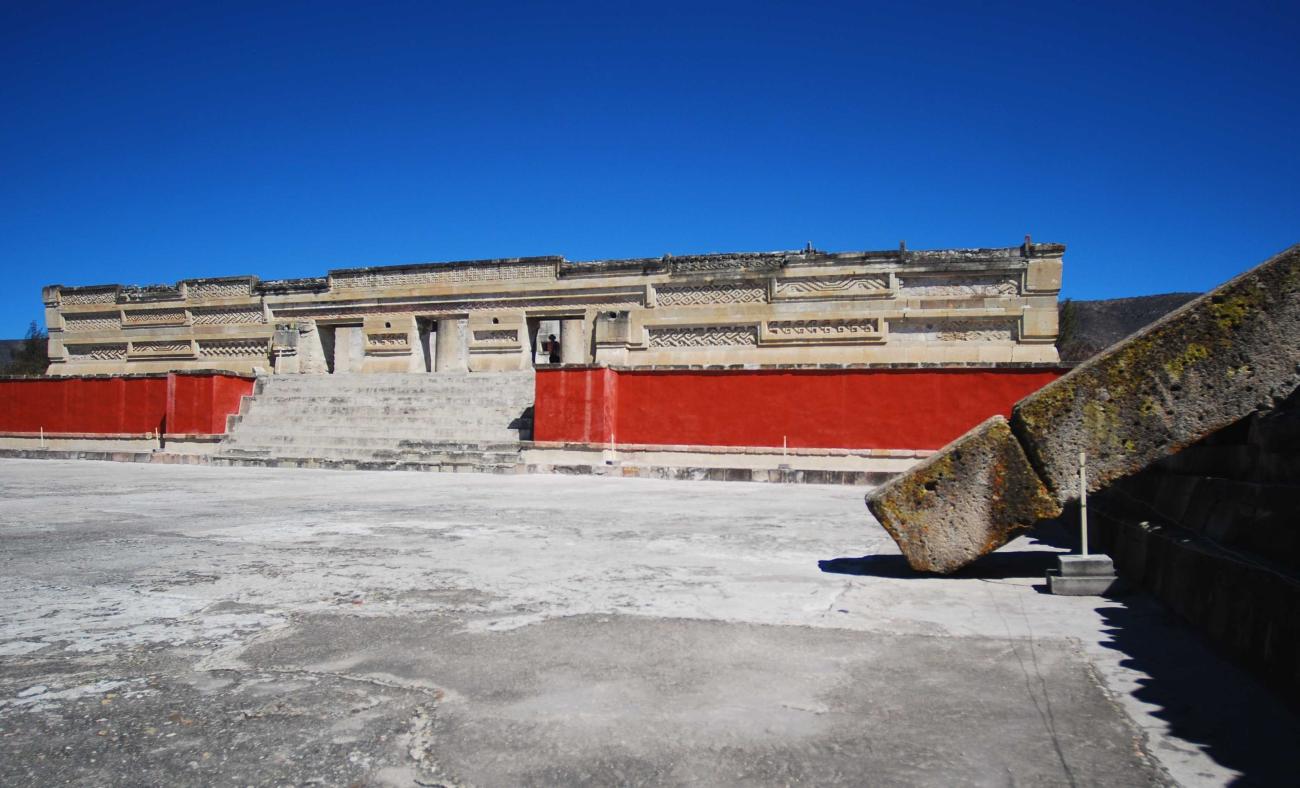
We can see the remains of paint, especially red paint, in several parts of the ancient city. Careful observation, and consultation of valuable testimony from national and international scholars (Eduard Seler, Edward Mühlenpfordt, Ignacio Marquina, Leopoldo Batres, Paul Gendrop, Alfonso Caso, Daniel Rubín de la Borbolla, John Paddock and Bernd Fahmel) have allowed us to rediscover the site’s abundance of mural painting, of which very fragmented yet revealing vestiges remain.


Grupo del Norte
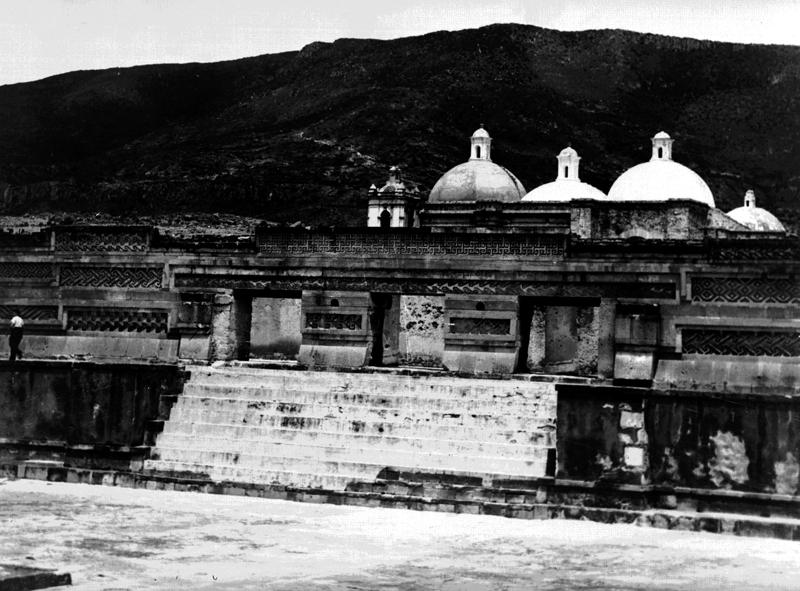
A Catholic temple was erected in the North Group of the archaeological zone. This group is composed of three quadrangles that communicate through corridors -the church was built on one of them. The rooms that close the interior spaces do not have bases or platforms, so its spatial organization…
Grupo del Norte

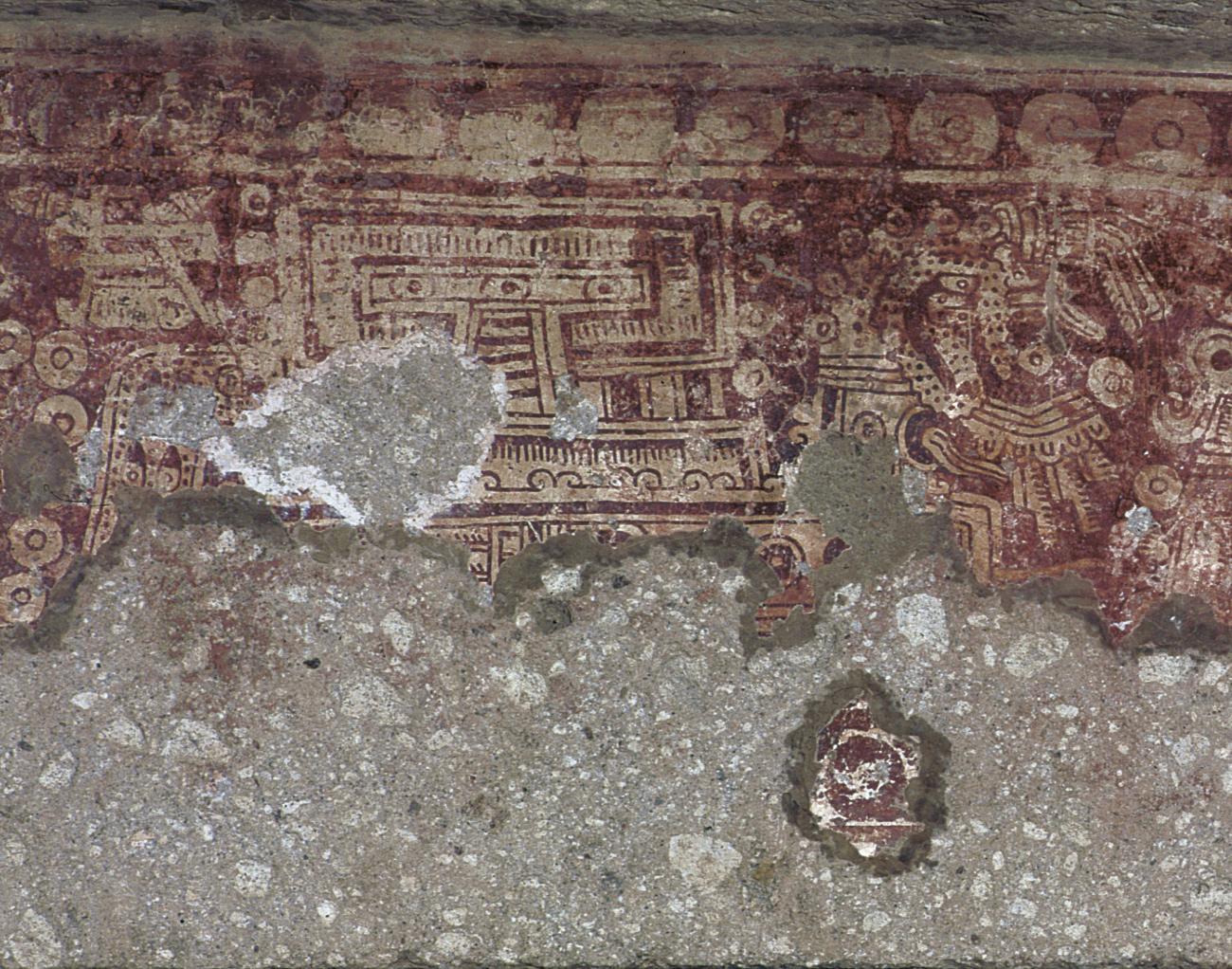
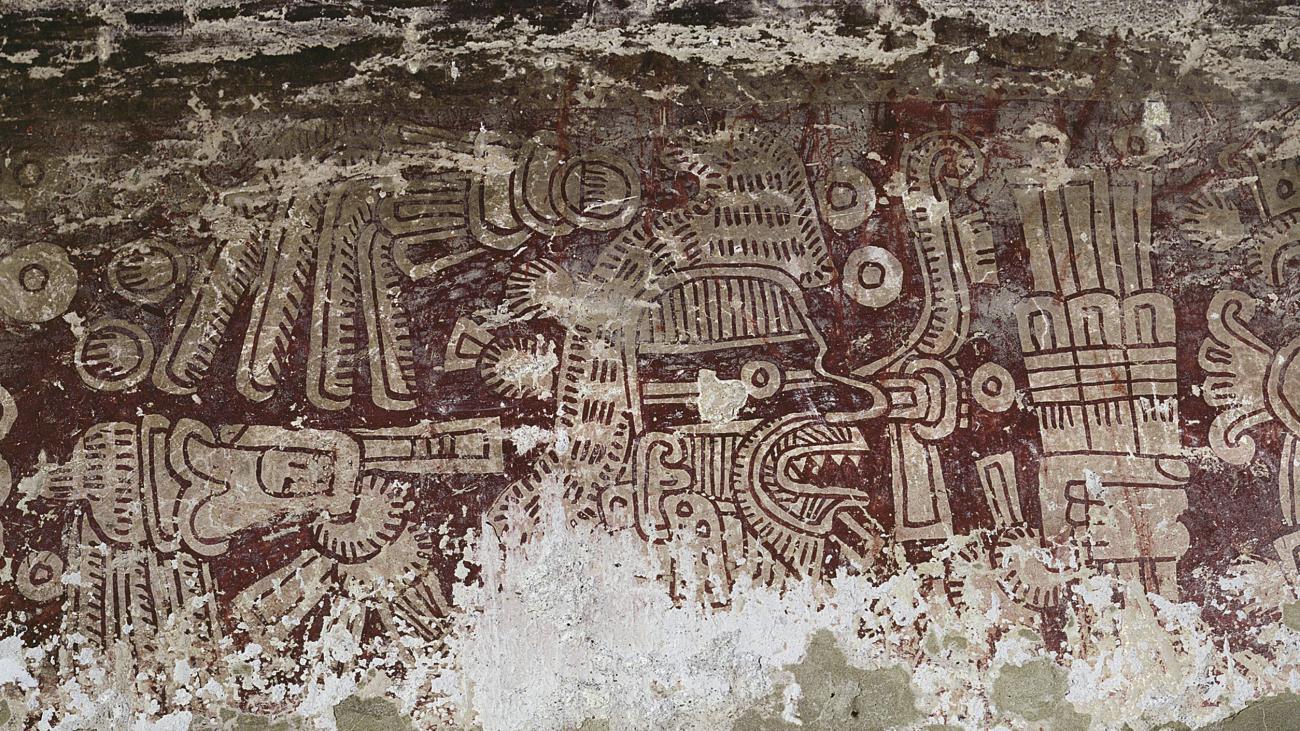
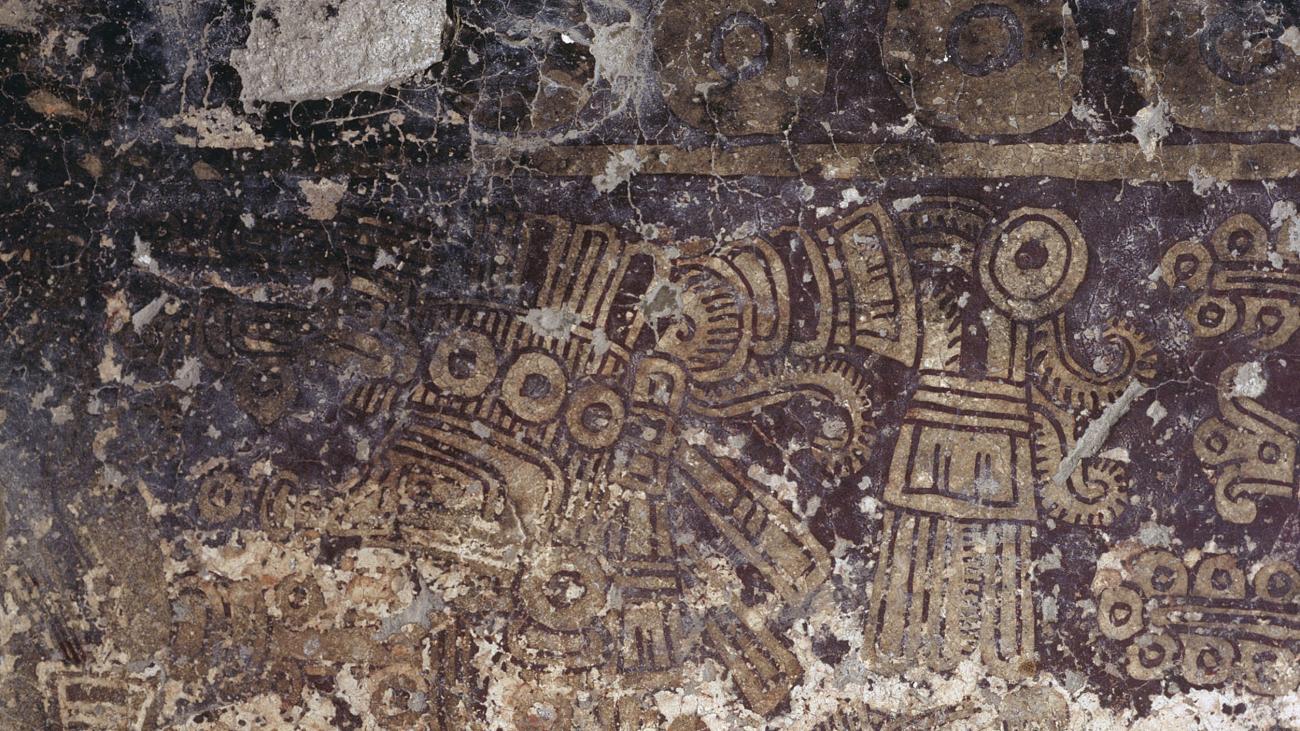
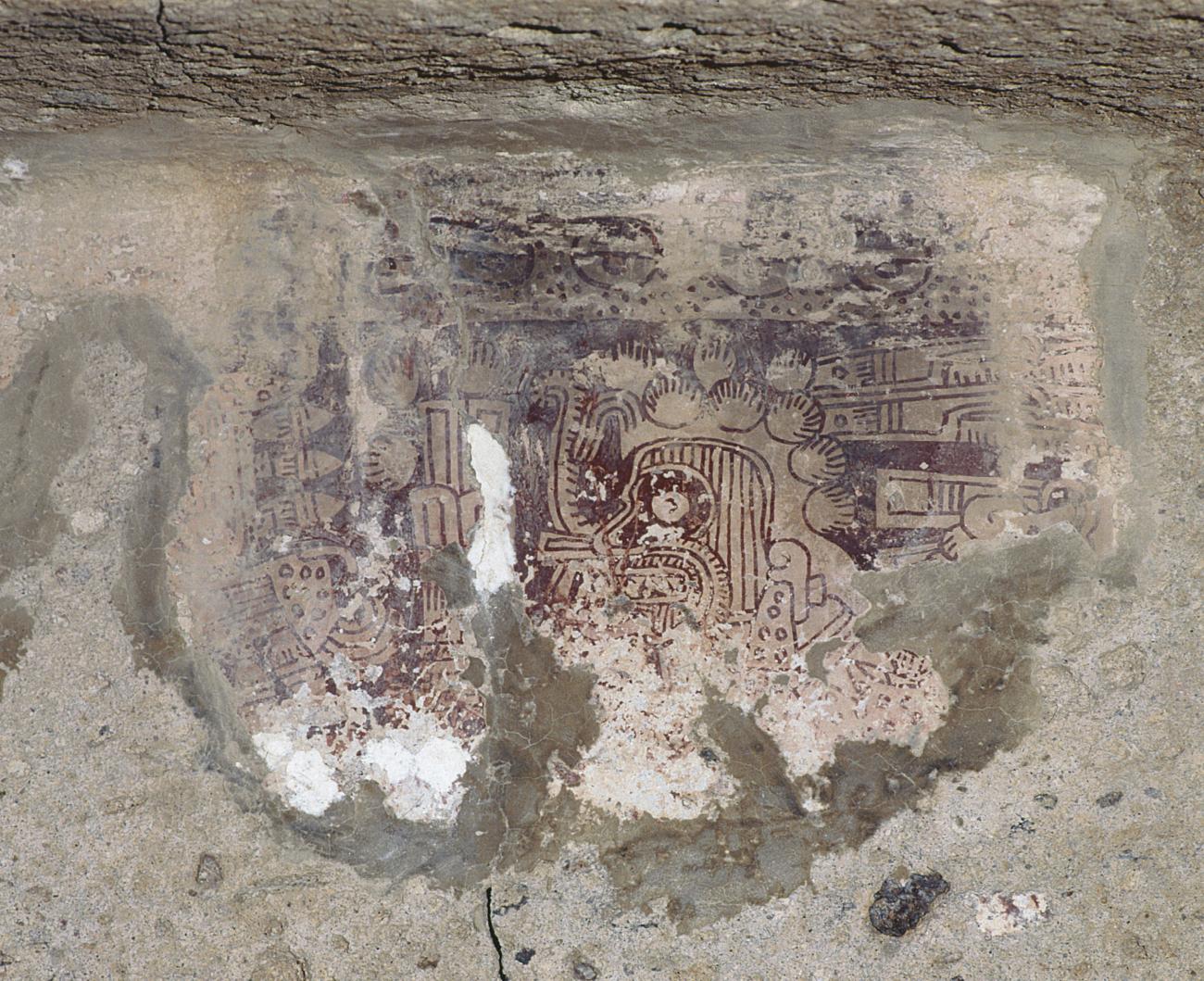
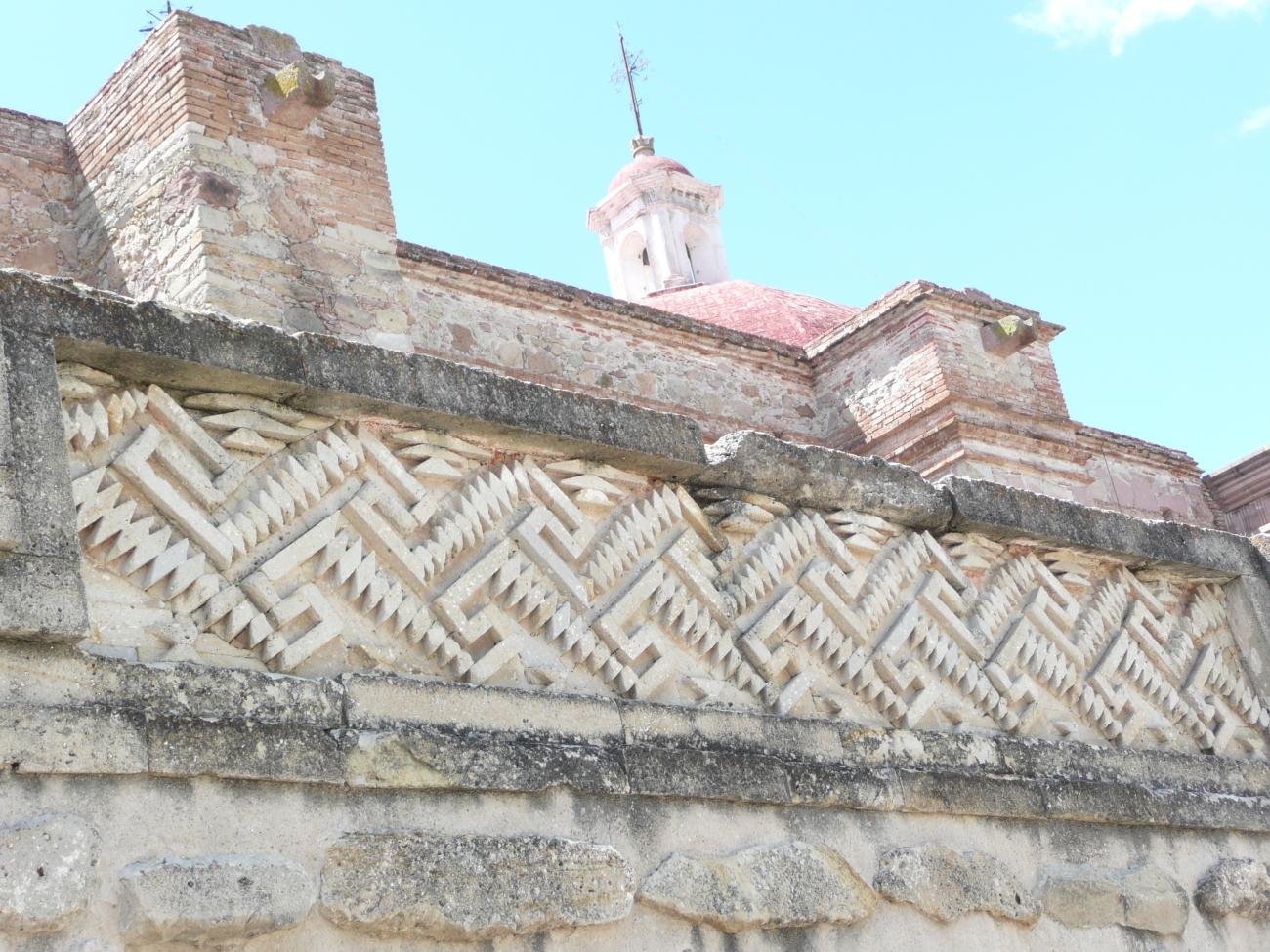
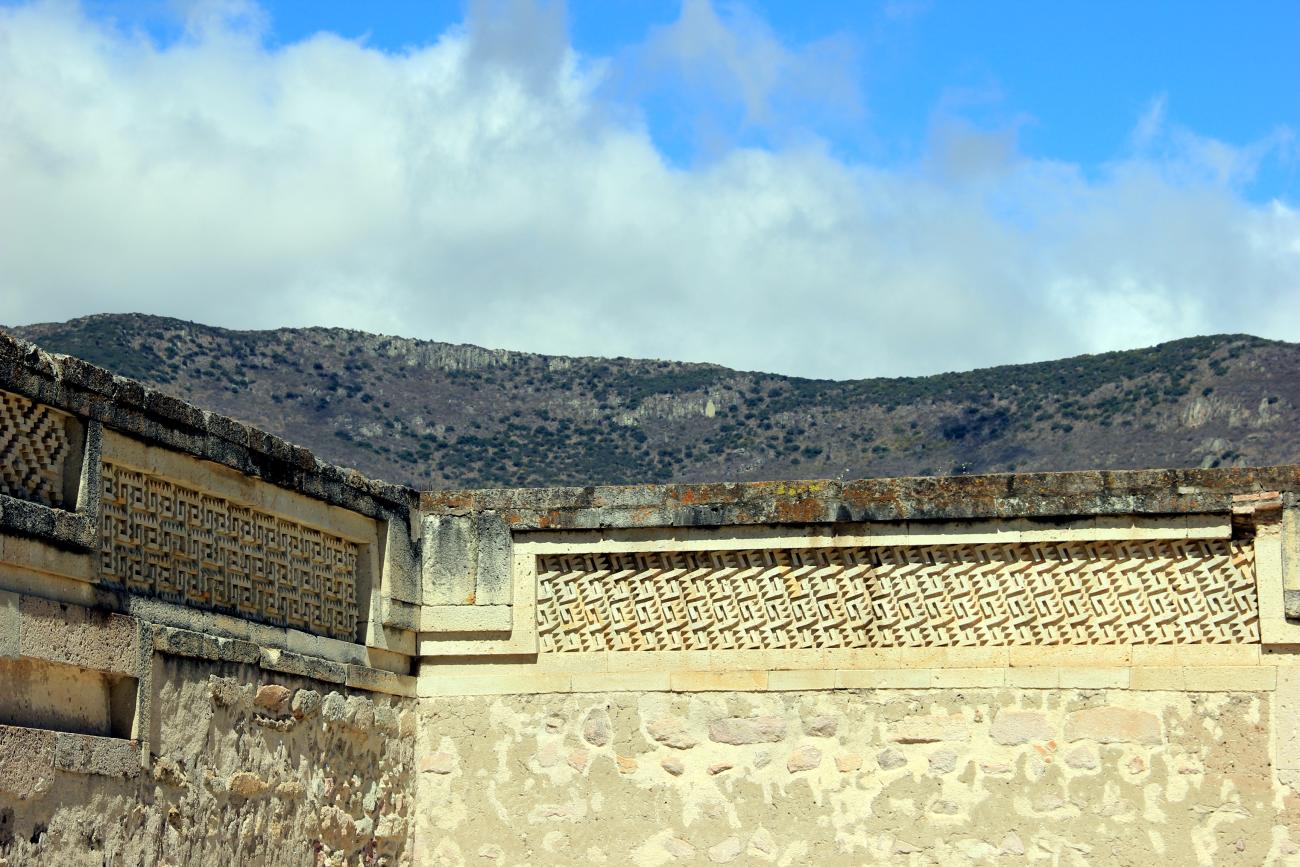
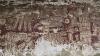
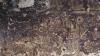
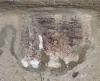
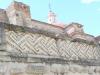
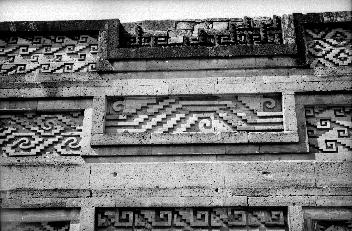
A Catholic temple was erected in the North Group of the archaeological zone. This group is composed of three quadrangles that communicate through corridors -the church was built on one of them. The rooms that close the interior spaces do not have bases or platforms, so its spatial organization allows a particular privacy. The ornamentation consists, in its majority, of flattened walls that finish, in the superior part, with designs of fretwork. In this part of the area there are some mural paintings.
Mural of the Wild Turkey: It is located on the lintel of Patio A of the North Group. It is a very common galliform figure, which appears on the left side of a building and is shown in profile. It wears a headdress and the body does not exist, so the tail and legs were not drawn either. However, the silhouette of the head can be accurately distinguished.
North Group Mural, Patio A, West Lintel: This figure represents a character in profile. He wears a headdress and face painting; on the nape of the neck there are two feathers and two concentric circles in front of the headdress, which are held with a tie made up of short and long feathers. The face has striped designs, the teeth end in a point and a cylindrical object protrudes from the lower lip. With one hand she holds an element composed of oval shapes.
Mural in Patio A, West Lintel (2): Anthropomorphic character in profile. On the head there are some traces that suggest a headdress, on the back of which there are feathers of different sizes; behind one of the feet there are three concentric circles and one more in front of its knee.
Mural in Patio A, West Lintel (3): Anthropomorphic character in profile, with facial paint covering his face, except around the nose. His mouth is open showing his teeth.
Rear view of the North Group: During the Spanish evangelization a church dedicated to San Pablo Evangelista was erected, and one of the walls of the pre-Hispanic construction served as a wall.
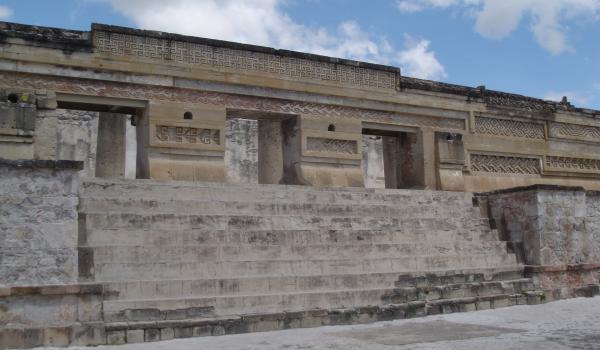
Building 5: Most of its decoration consists of flattened walls topped (approximately one third) with fretwork designs.
Grupo de las Columnas
It is located in the center of the area and stands out for its large-scale architecture, fine finishing and the exclusive use of monolithic columns. It is made up of three quadrangles (D, E, F) of different dimensions and located on different levels ordered from north to south. Quadrangles E and F…
Grupo de las Columnas
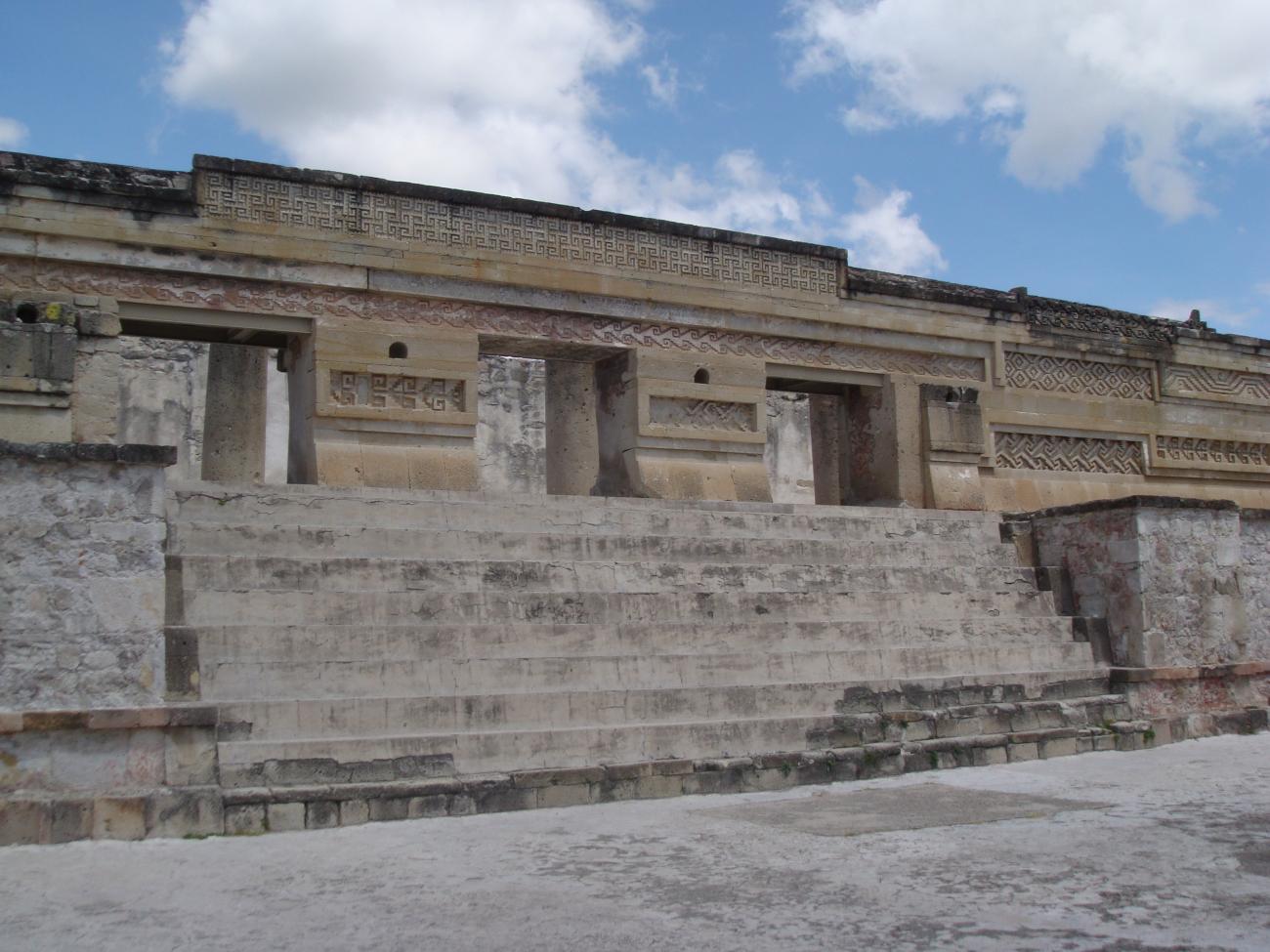
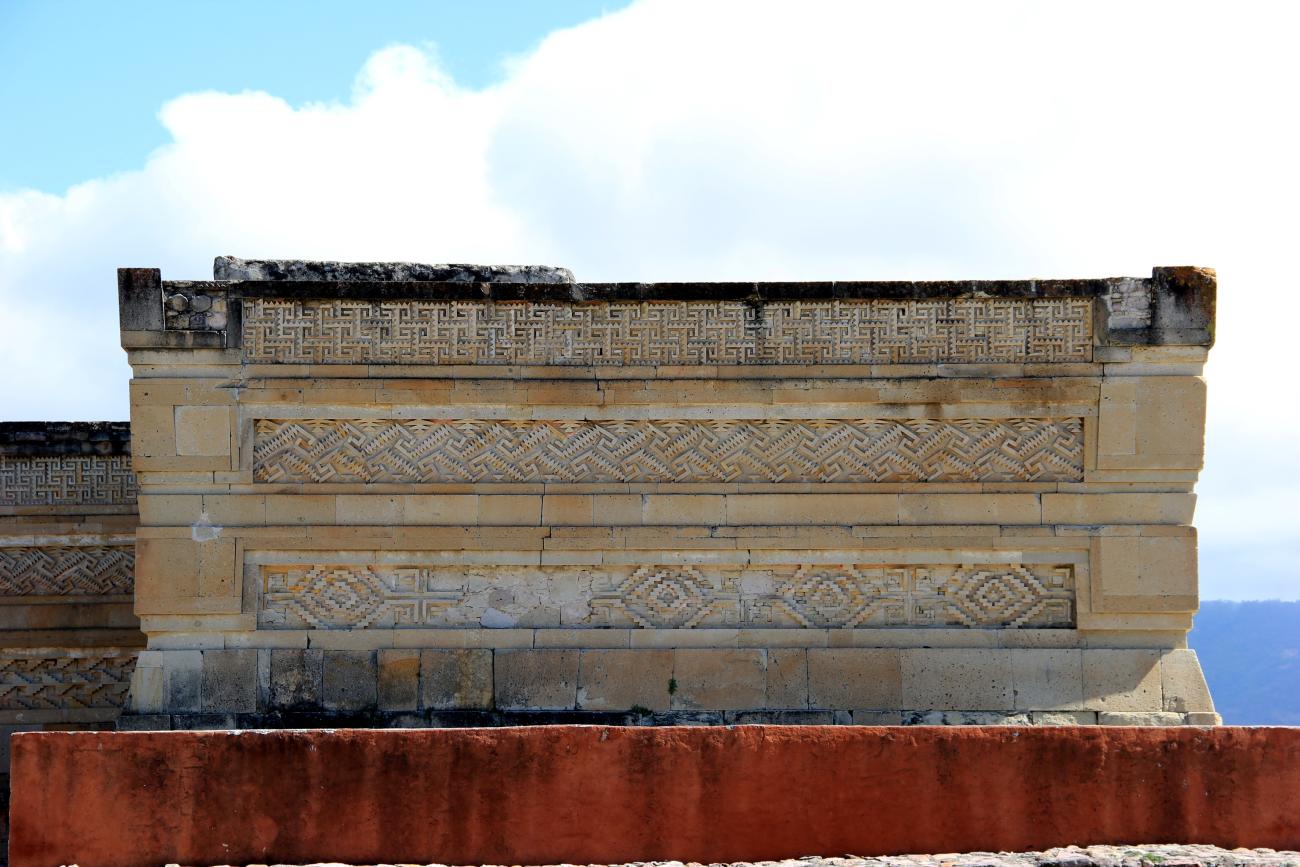
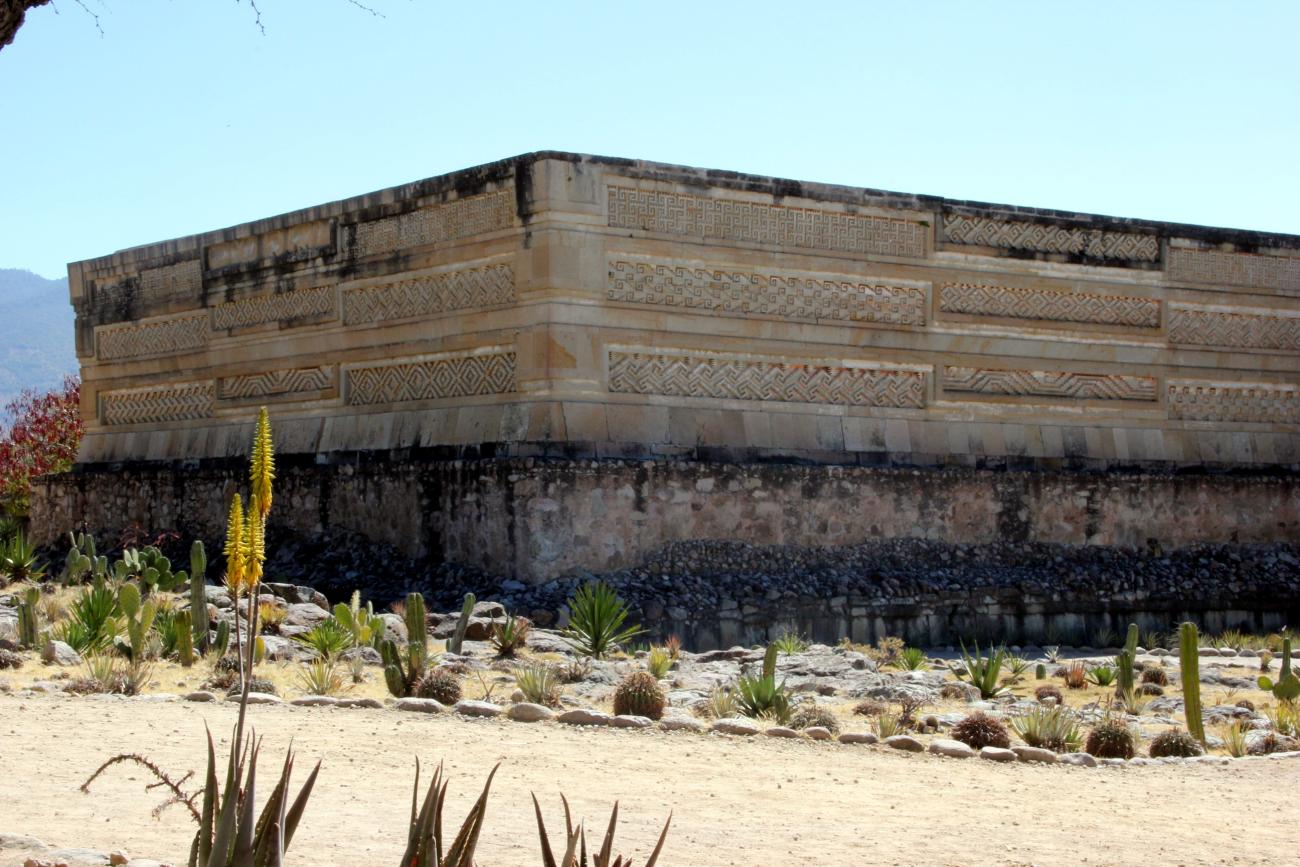
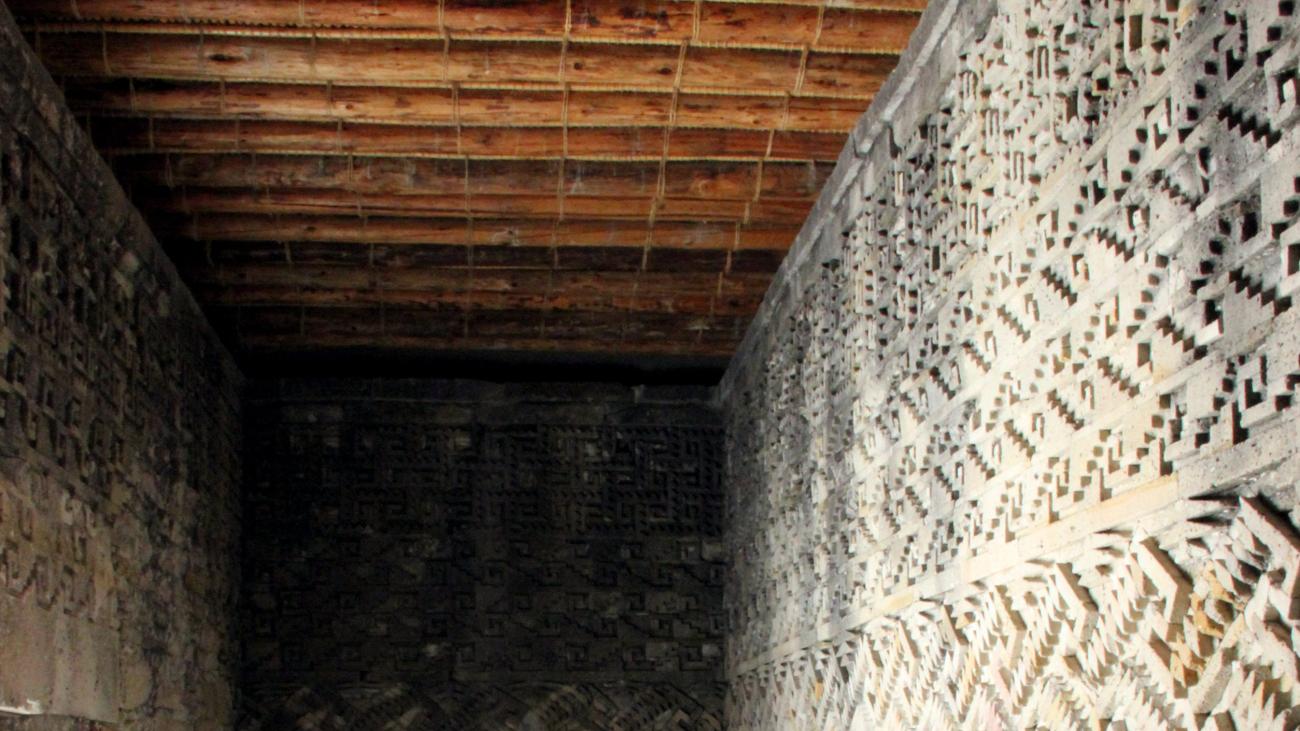
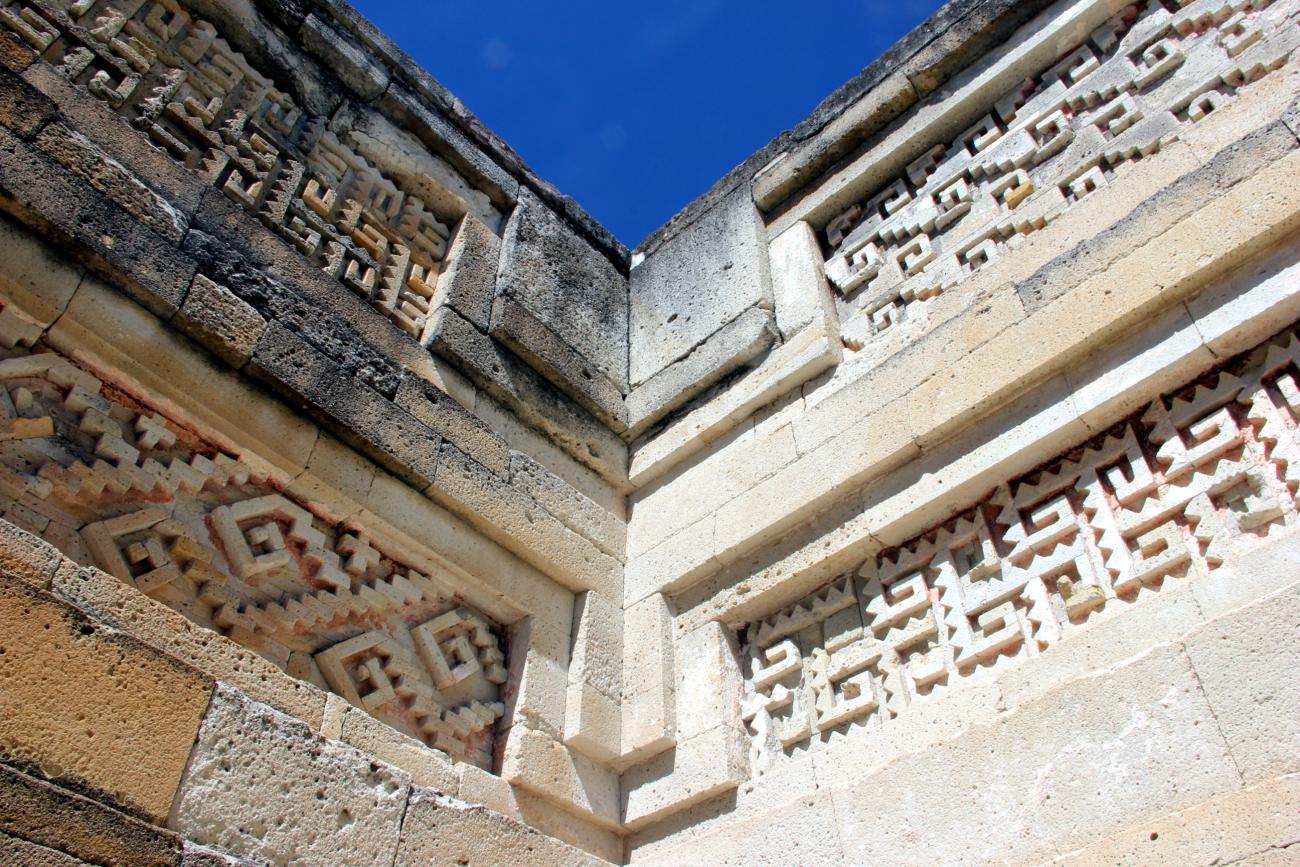
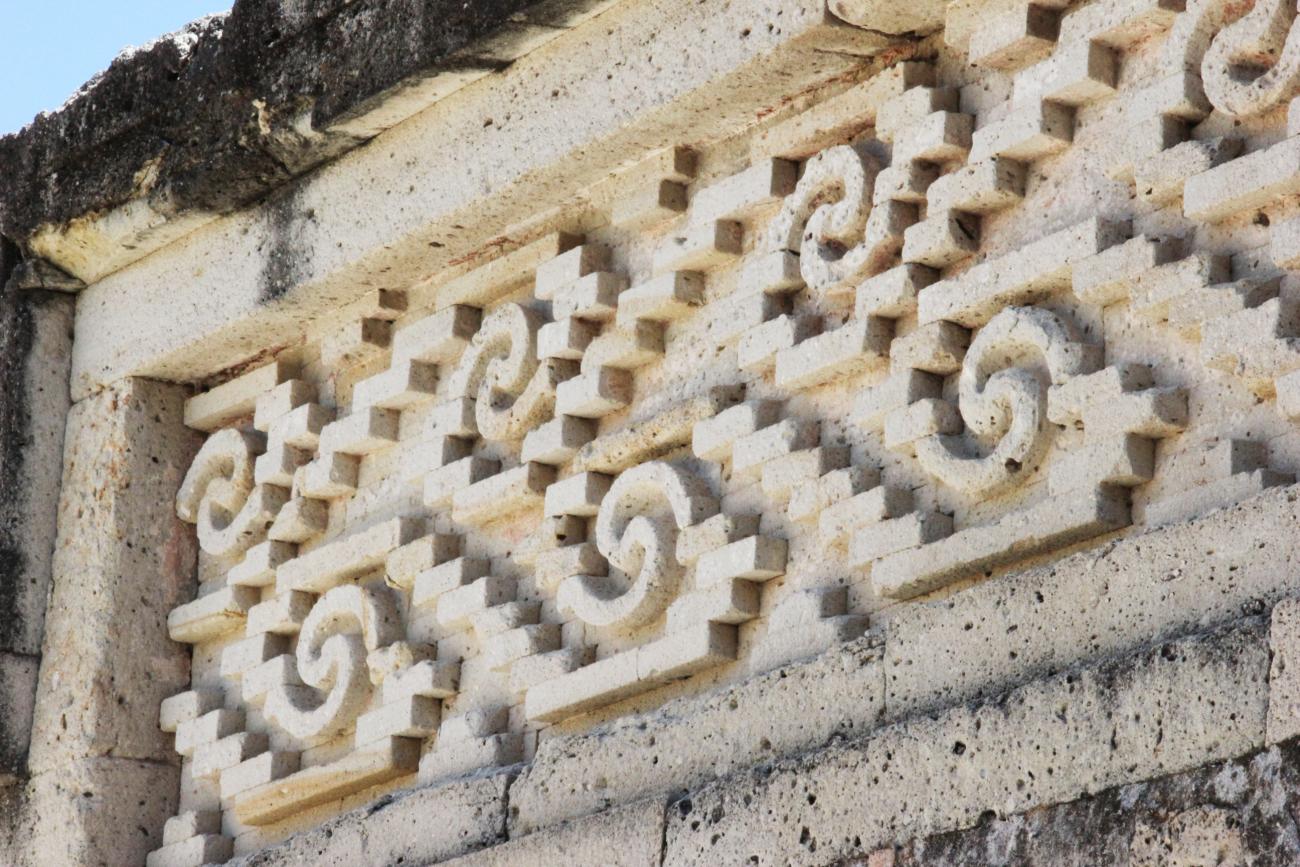
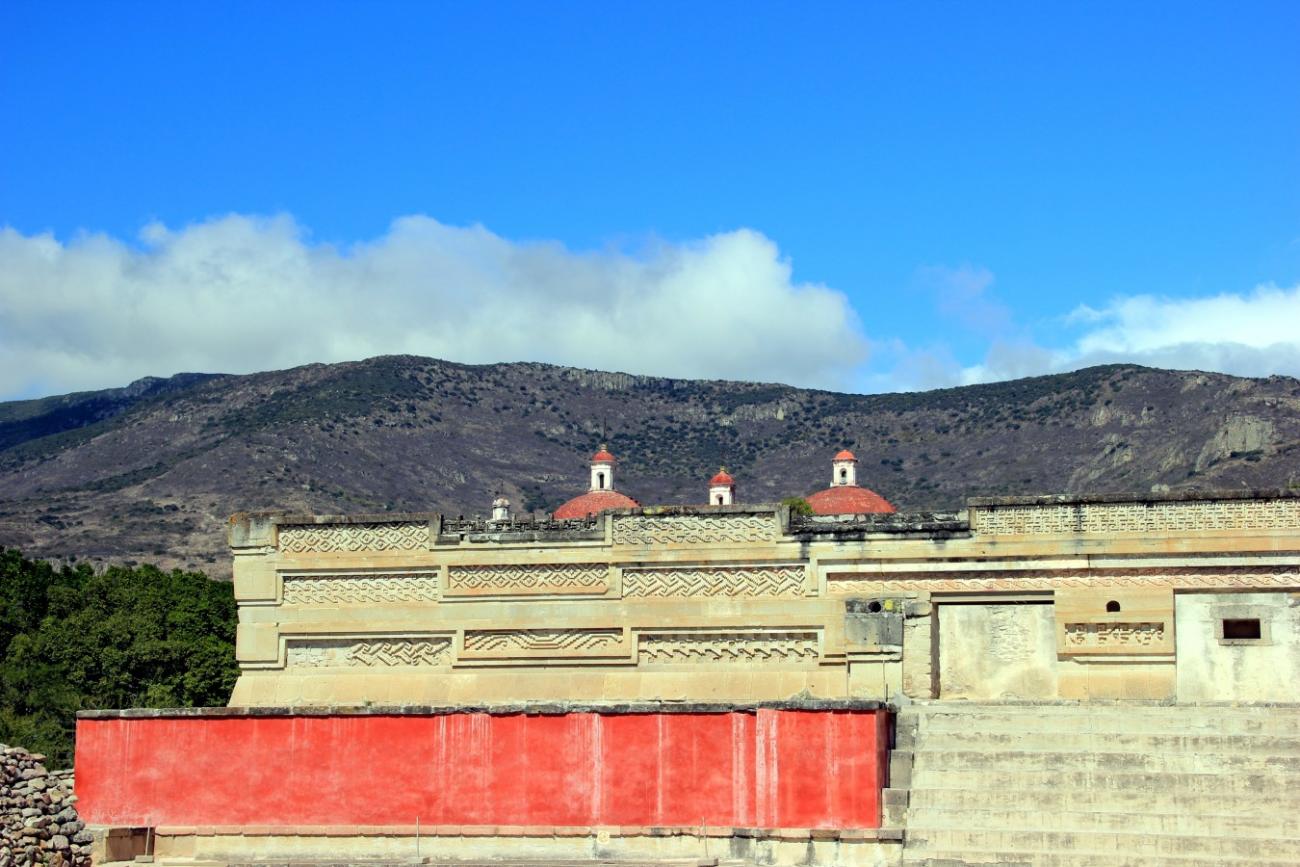
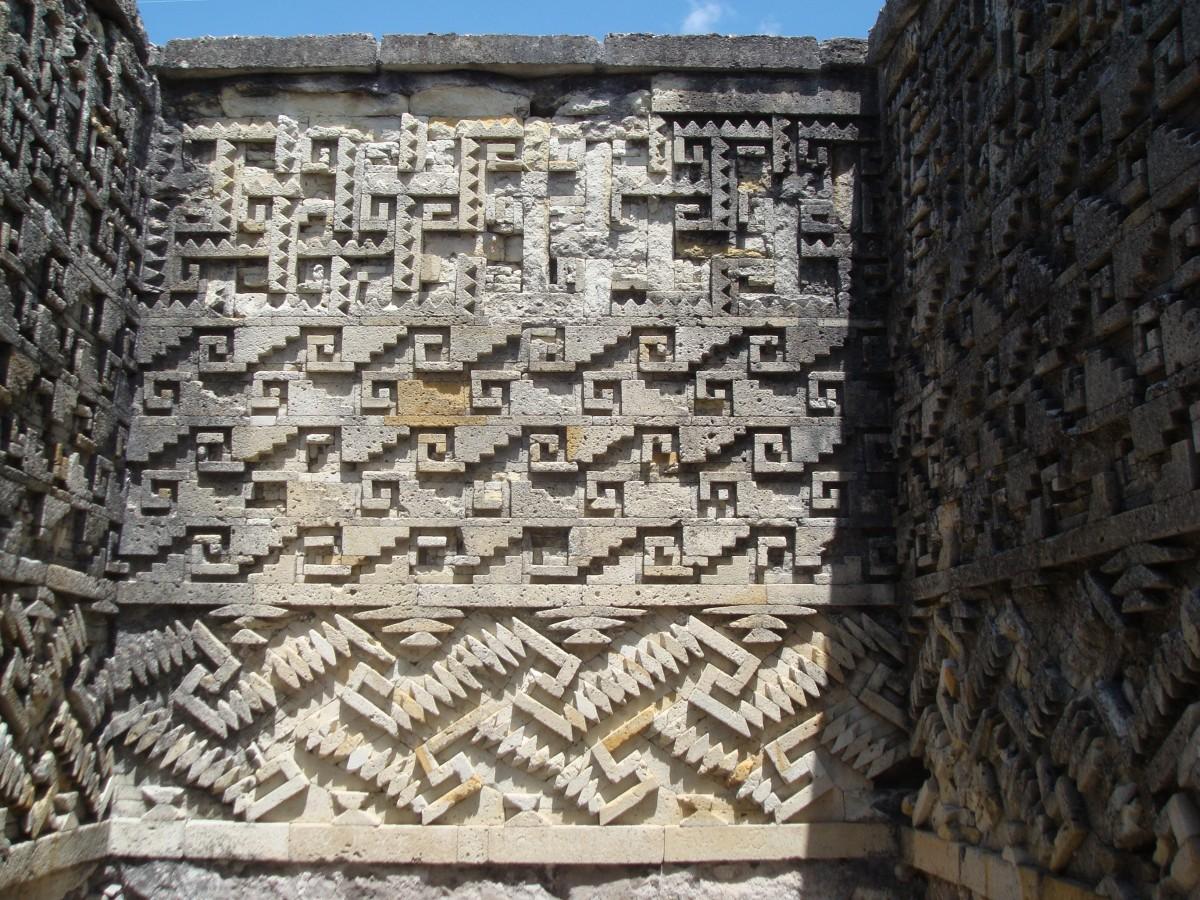
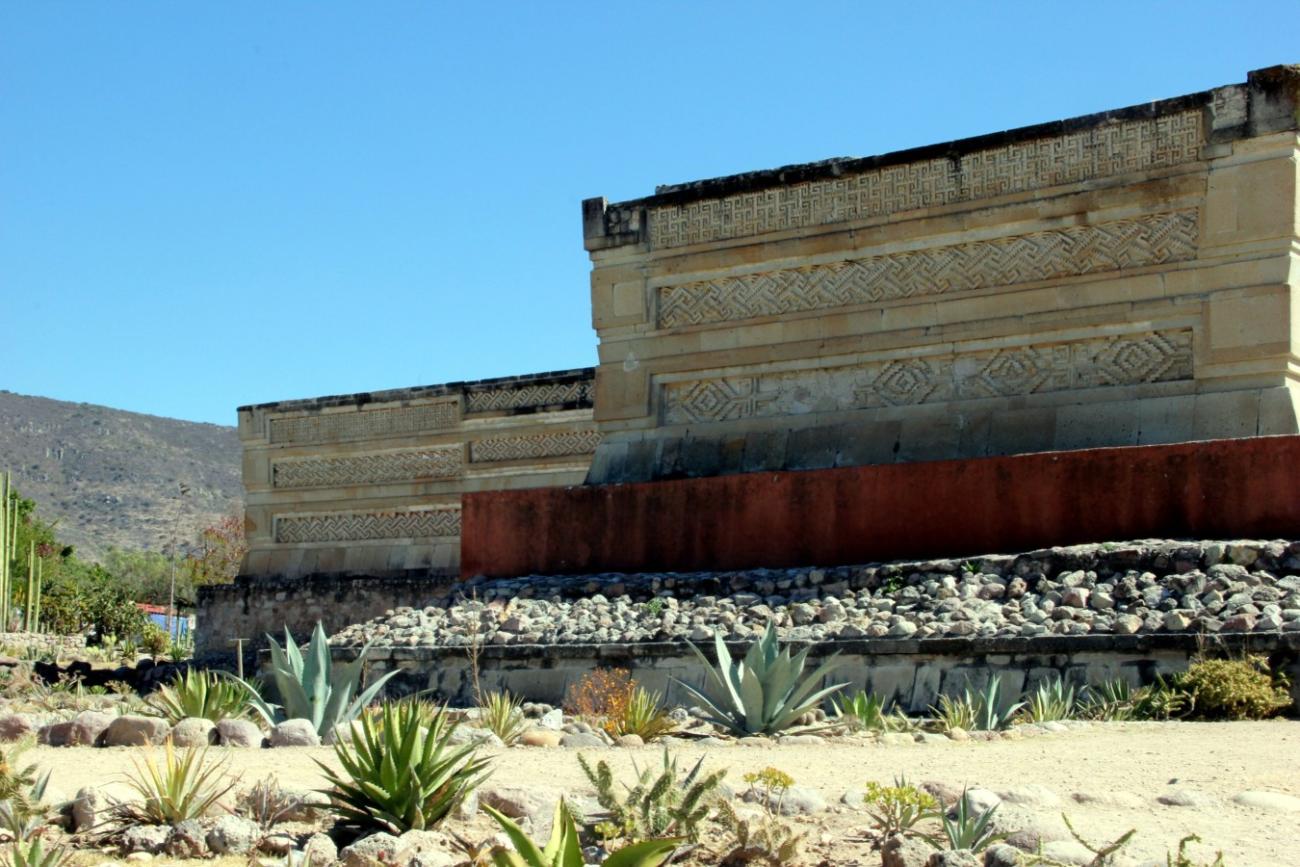
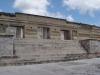
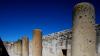
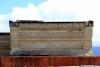
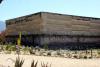
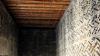
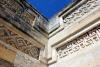
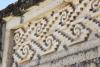
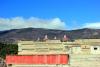
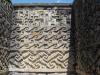
It is located in the center of the area and stands out for its large-scale architecture, fine finishing and the exclusive use of monolithic columns. It is made up of three quadrangles (D, E, F) of different dimensions and located on different levels ordered from north to south. Quadrangles E and F are large open courtyards, limited by platforms that supported the upper buildings. Quadrangle D is an enclosure of great privacy, a palace of extreme architectural beauty whose facades and interior walls are profusely ornamented by friezes of assembled mosaic fretwork.
Hall of Columns: Building attached to the south side and deployed in an east-west direction. It consists of a large room characterized by six large monolithic columns that supported the roof. Most likely this hall was used for civic-administrative activities. The columns had the function of supporting a roof of large wooden beams and flattened to create a roof terrace.
East view of the Columns Building, Courtyard E: This construction is distinguished by its architectural use of large monolithic stones and by its facades ornamented with mosaics of fretwork called Xicalcoliuhqui.
North View, Building 12: In addition to the large monolithic stones and ornate facades, what characterizes this building are the different designs framed by panels, elements that are part of the rich Zapotec architectural tradition that began in Monte Albán and has strong Teotihuacan influences.
Room in the Group of Columns: The ceiling and the upper part of the walls ornamented with fretwork are shown. The ceiling was reconstructed following archaeological criteria to give an idea of the original.
Northwest corner. Interior Courtyard
Building 16: The elements of the Mixtec codices, as well as their murals, have symbols of the sky, the earth, the sun, the moon and the stars, all of which are reflected in the decoration of this building. Only in Mitla have Mixtec representations of the sky been seen.
Grupo del Arroyo
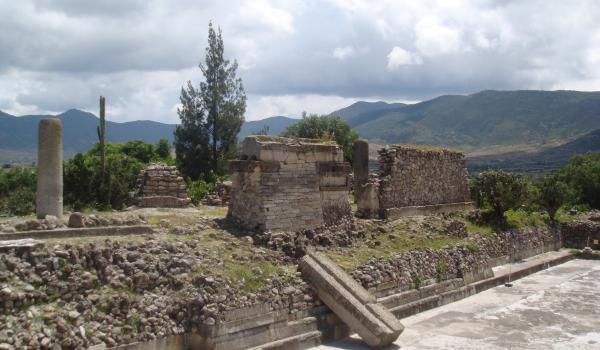
It is located in the southern area of the site and is composed of three quadrangles that communicate by corridors, one of which is surrounded by four narrow bays, which delimit the courtyards. It is currently partially covered by recent fillings. However, it is possible to appreciate its large…
Grupo del Arroyo
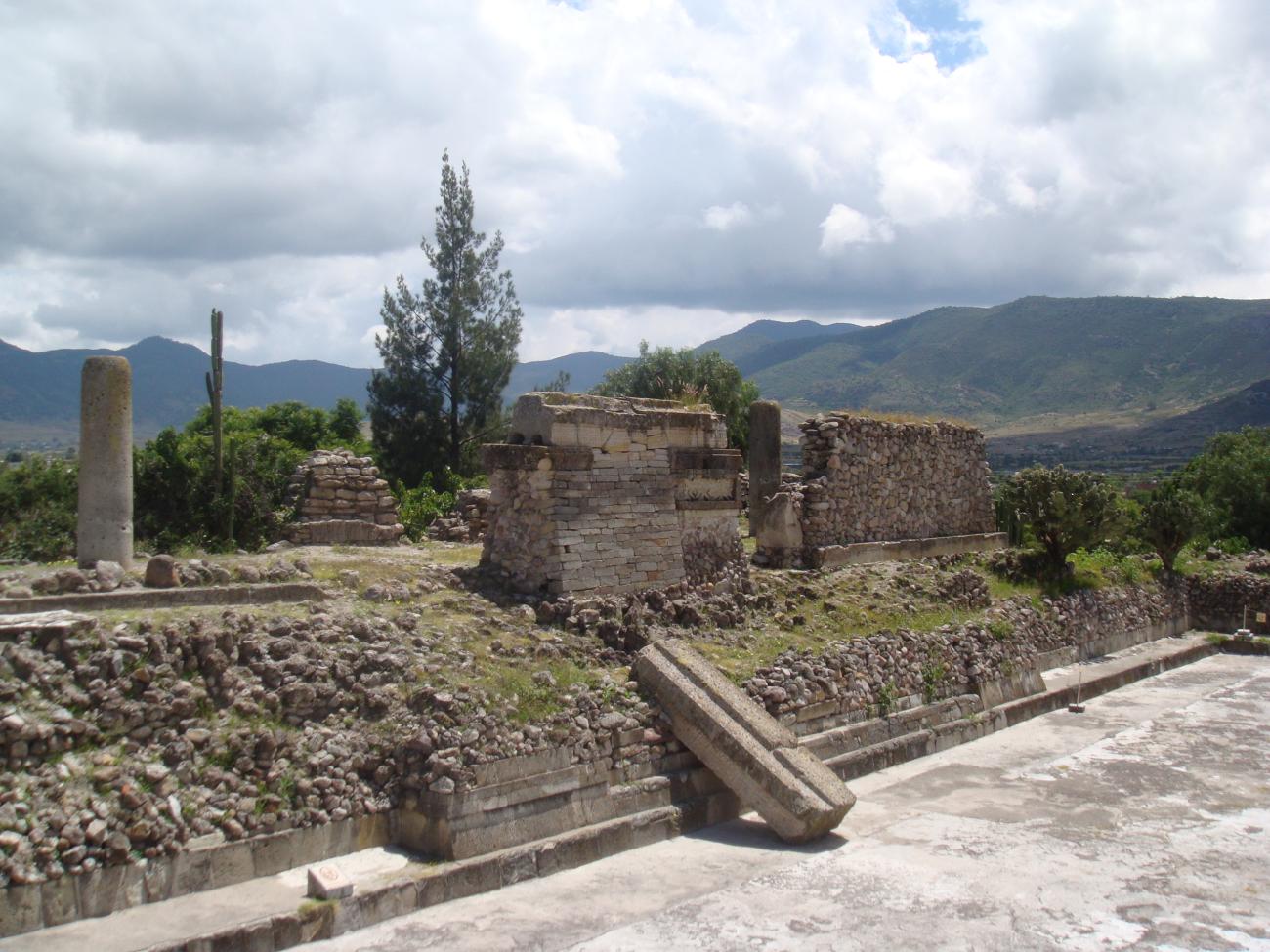
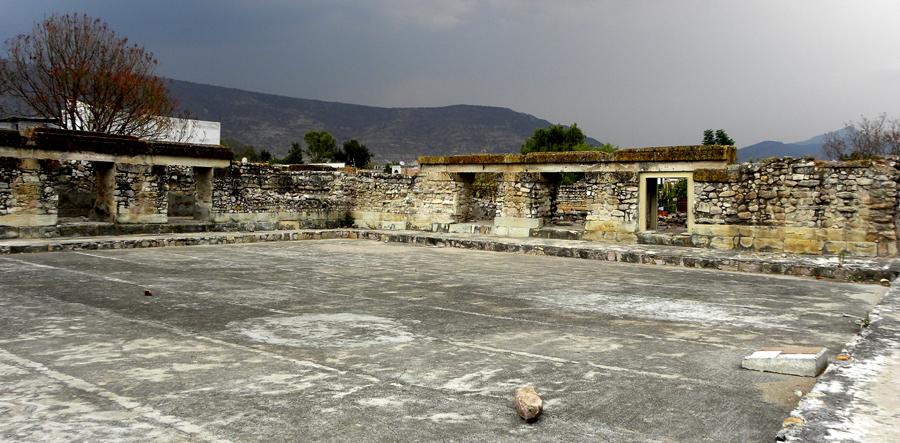
It is located in the southern area of the site and is composed of three quadrangles that communicate by corridors, one of which is surrounded by four narrow bays, which delimit the courtyards. It is currently partially covered by recent fillings. However, it is possible to appreciate its large walls and lintels, some of them decorated.
Courtyard I, North Hall: In different buildings of the site there is evidence that there was mural painting, since remains of red color are appreciated in this structure and in the center of the courtyards, as well as in the socles of some walls.

Grupo del Adobe o del Calvario
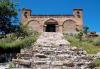
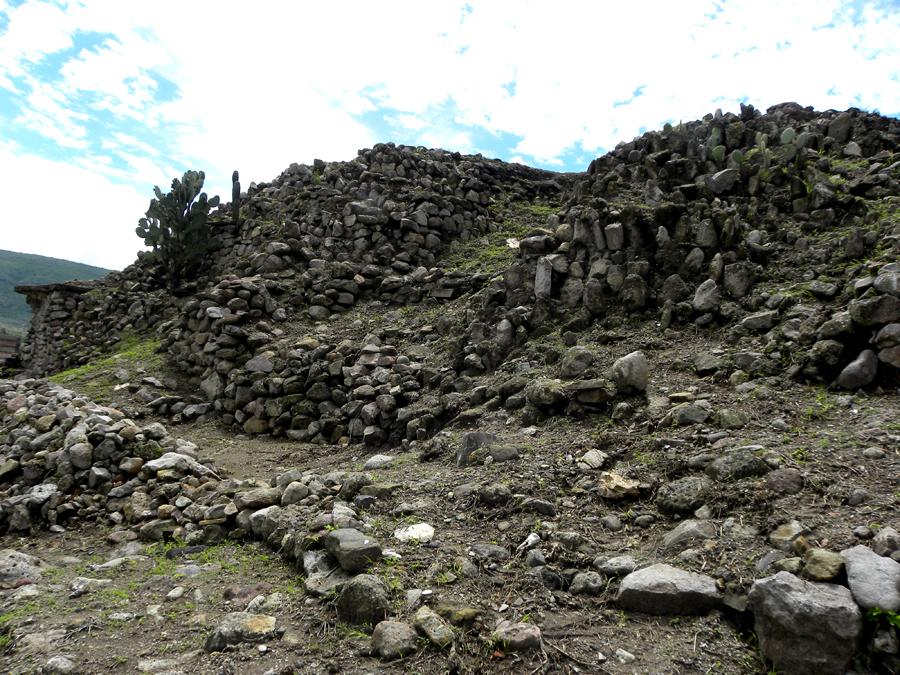
It consists of a quadrangular square surrounded by four mounds; the one on the east side is the highest, and apparently held the most important temple or palace. The rest of the mounds are lower and of lesser importance. They are made of adobe, hence the name of the group.
Grupo del Adobe o del Calvario


Grupo del Sur
It is probably the oldest in Mitla. It is built in the manner of the Adobe Group and only the remains of a plaza with four mounds (the one on the east side is the highest) are preserved. Currently there are few remains of this complex, since the urban invasion has practically made it disappear.
Grupo del Sur
A sample of the highest refinement of Zapotec architecture and the enjoyment of esthetic creation



Contact
- Dirección del Centro INAHJosé Manuel Bañuelos Ledesmajosemanuel_banuelos@inah.gob.mx+52 (951) 513 0389Protección y Resguardo de Bienes CulturalesManuel Rufino Aguilar Martínezmanuel_aguilar@inah.gob.mx+52 (951) 513 3346, exts. 2880